Reclaiming the Ancestors: How a Quiet Spiritual Movement Is Transforming African American Identity and Healing
A Return That Feels Like Coming Home
There is a particular kind of grief that comes with cultural severance — the quiet ache of not knowing where you come from, of carrying a history that was deliberately obscured. For millions of African Americans, that grief has been a companion across generations. But something is shifting. In cities from Baltimore to Oakland, from Chicago's South Side to Houston's Third Ward, people are building ancestral altars, learning the names of Orishas, burning candles for those who came before, and gathering in circles to honor the dead in ways their enslaved ancestors were once forbidden to practice.
This is not a fringe phenomenon. It is a cultural renaissance — measured, intentional, and growing — and it deserves to be understood on its own terms.
The Historical Wound That Made This Necessary
To understand why ancestral veneration is experiencing such a profound resurgence, one must first reckon with why it was lost. The transatlantic slave trade did not merely displace millions of Africans geographically. It was a systematic assault on spiritual identity. Enslaved people were stripped of their names, their languages, and their religious practices. Ancestral traditions that had sustained communities for millennia were criminalized, ridiculed, and in many cases violently suppressed.
What survived did so in fragmented, coded, and syncretic forms — woven into the fabric of Hoodoo, embedded in the call-and-response of Black church music, preserved in the ceremonies of Haitian Vodou, Cuban Lucumí, and Brazilian Candomblé. These were not corruptions of African tradition. They were acts of extraordinary spiritual resilience.
The current renaissance, then, is not the invention of something new. It is the recovery of something very old — a deliberate act of spiritual archaeology undertaken by communities who have decided that the wound of cultural erasure deserves a real and lasting remedy.
What Ancestral Veneration Actually Is — And What It Is Not
Before proceeding further, it is worth addressing a persistent misconception that clouds public understanding of these practices. Ancestral veneration is not ancestor worship in the theological sense that the term implies in Western religious discourse. The practitioners we spoke with across various traditions are consistent on this point: one does not pray to ancestors as one might pray to a deity. Rather, one communicates with them — acknowledging their continued presence, seeking their guidance, expressing gratitude, and maintaining the relational bonds that, in African cosmological understanding, do not dissolve at death.
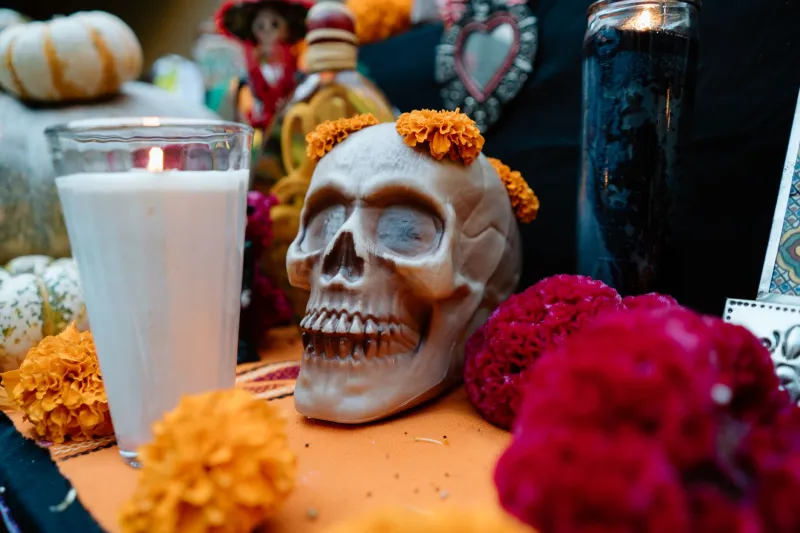
In most African spiritual traditions, the boundary between the living and the dead is understood to be permeable rather than absolute. The ancestors exist in a realm adjacent to the living, and their wisdom, accumulated through lifetimes of experience, remains accessible to those who know how to listen. An ancestral altar — typically a designated space in the home bearing photographs, mementos, water, flowers, and offerings meaningful to the deceased — functions as a point of contact, a physical expression of an ongoing relationship.
This framework stands in stark contrast to the Western cultural tendency to treat death as a final severance, an ending after which the deceased recede entirely from the lives of those remaining. Many practitioners describe the shift to ancestral veneration as profoundly disorienting at first, not because the practice feels strange, but because it feels unexpectedly natural — as though they are remembering something they never consciously knew.
The Psychological Resonance: What Practitioners Report
The therapeutic dimensions of ancestral veneration are increasingly drawing the attention of mental health professionals, particularly those who work within African American communities. While formal clinical research in this area remains limited, the anecdotal and qualitative evidence is compelling.
Practitioners consistently report several categories of benefit. The first is a sense of continuity — of belonging to something larger and older than one's individual life. In a culture that places enormous emphasis on individual achievement and self-sufficiency, this sense of embeddedness in a longer human story can be profoundly stabilizing. "I stopped feeling like I was starting from nothing," one practitioner in Atlanta described. "I understood that I was the continuation of people who had already survived the unsurvivable."
The second reported benefit is a framework for processing grief. Western culture is notably uncomfortable with death, and its rituals of mourning tend to be brief and privatized. Ancestral veneration offers an ongoing, structured relationship with loss — one that acknowledges grief without demanding that it be resolved or transcended. The ancestors are not left behind; they are incorporated.
Third, many practitioners describe a heightened sense of accountability — not in a burdensome sense, but in a clarifying one. When one understands oneself as a link in a chain stretching backward and forward through time, choices carry different weight. "I make decisions differently now," a practitioner in Philadelphia noted. "I ask myself whether this honors the people who sacrificed for me to be here."
Beyond the Diaspora: Who Else Is Practicing?
While the ancestral veneration renaissance is most visible and most culturally urgent within African American and African diaspora communities, the movement extends beyond those boundaries. A significant number of white Americans, Latino practitioners, and individuals of mixed heritage are also drawn to African ancestral traditions — a development that raises legitimate questions about cultural appropriation and the ethics of spiritual borrowing.
Leaders within established African spiritual traditions are generally thoughtful on this question, distinguishing between extractive appropriation — the casual adoption of symbols or aesthetics divorced from their meaning — and sincere, community-engaged initiation. Many Ifá and Lucumí houses in the United States do accept initiates regardless of racial background, provided they approach the tradition with genuine commitment and submit to the proper processes of learning and initiation. The gatekeeping, where it exists, is not primarily about ethnicity but about seriousness of purpose.
For non-African Americans drawn to these practices, the more ethically sound path often begins not with African traditions specifically, but with one's own ancestral lineage — whatever that may be. Many African spiritual teachers actively encourage this, noting that a person who is disconnected from their own ancestors is poorly positioned to build meaningful relationships with someone else's.
Pop Culture Mysticism Versus Living Tradition
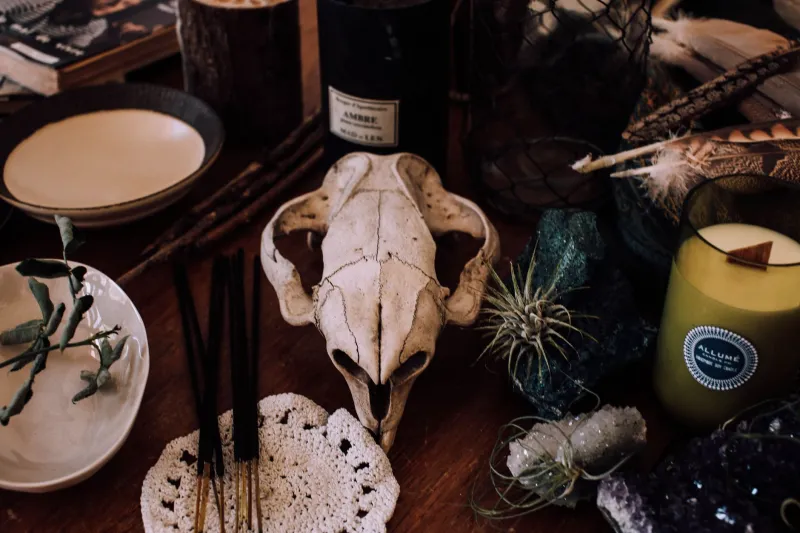
It would be intellectually dishonest to discuss this renaissance without acknowledging the shadow it casts — the commodification and aestheticization of African spiritual practice by a wellness industry hungry for exotic content. Social media platforms are awash in images of beautifully styled ancestral altars, Orisha-themed jewelry, and curated "African spirituality" content that frequently strips these practices of their communal, ethical, and initiatory dimensions.
The distinction between a living tradition and its aesthetic imitation is not always obvious to the uninitiated, and this creates real harm. It dilutes the meaning of practices that carry profound communal weight. It can mislead sincere seekers toward superficial engagement. And it can be deeply offensive to communities for whom these traditions are not a lifestyle choice but a form of survival and identity.
Authentic ancestral veneration is not a solitary aesthetic practice. It is embedded in community, guided by elders, and governed by ethical frameworks developed over centuries. The altar is not the practice; it is a tool within a much larger relational and spiritual architecture.
The Renaissance as Act of Resistance
Perhaps what is most striking about this movement, viewed from a cultural distance, is its political dimension — not in a partisan sense, but in the deeper sense of a people asserting the right to define themselves on their own terms. In a society that has historically pathologized Black spiritual expression, the deliberate reclamation of African ancestral practice is an act of profound self-determination.
It says, with quiet authority: we were not born into a void. We come from somewhere specific, somewhere ancient, somewhere rich with wisdom that no amount of historical violence could permanently extinguish. The ancestors are not gone. They have simply been waiting to be remembered.
And across the United States, in living rooms and community gardens and sacred groves, their descendants are finally — deliberately, joyfully, defiantly — doing exactly that.