Where the Ancestors Gather to Eat: African Food Rituals and the Transformation of the American Kitchen into Sacred Ground
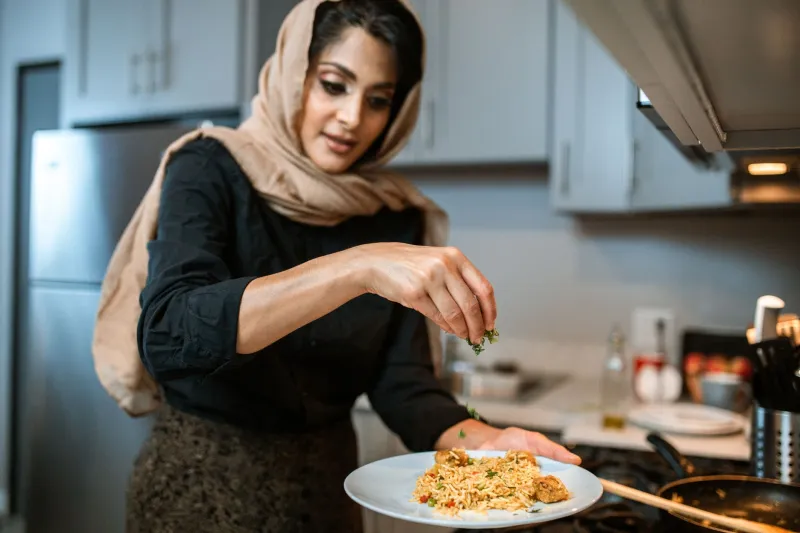
There is a moment, known in many West African households, that occurs before a single flame is lit beneath the pot. It is the moment of acknowledgment—a quiet pause in which the cook turns inward, offers a word of gratitude to the ancestors, and invites the unseen to participate in what is about to unfold. In that stillness, the kitchen ceases to be merely a room of utility. It becomes, in the truest sense, a sanctuary.
This understanding—that food preparation is inseparable from spiritual life—is among the oldest and most enduring expressions of African wisdom. And today, with remarkable momentum, it is finding a new home in American kitchens from Atlanta to Seattle, carried forward by those who sense that something essential has long been missing from their relationship with food.
The Spiritual Architecture of the African Kitchen
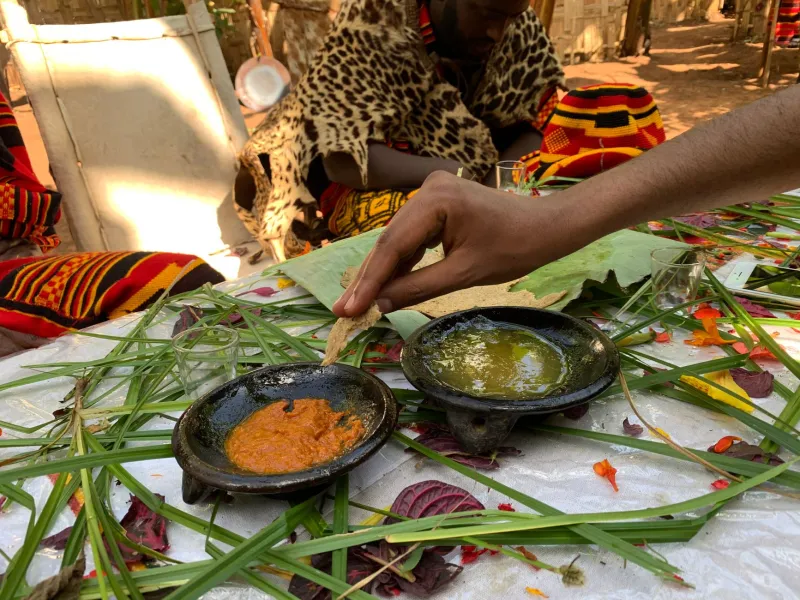
Across the vast and varied continent of Africa, the kitchen has never been a neutral space. Among the Yoruba of Nigeria, the hearth is considered a living entity, a threshold between the physical world and the realm of the orishas. Among the Akan of Ghana, certain ingredients carry spiritual weight that extends far beyond their nutritional value—palm oil, for instance, is associated with purification and protection, and its use in cooking is often accompanied by spoken intention or prayer. In many Bantu-speaking communities throughout Central and Southern Africa, the preparation of communal meals serves as a form of active ancestor veneration, with portions set aside not merely as symbolic gesture but as genuine nourishment offered to those who have passed.
These traditions share a common philosophical foundation: the belief that the act of feeding another person—or oneself—is a sacred responsibility. Food, in this worldview, does not merely sustain the body. It carries the energy, intention, and spiritual condition of the one who prepared it. The kitchen, therefore, is where spiritual character is made visible in the most tangible and necessary way.
An Intimate Practice Takes Root in America
For many African Americans, the rediscovery of these traditions has arrived as a form of homecoming. The kitchen has always occupied a special emotional and cultural territory in Black American life—a space where grandmothers preserved memory, where recipes traveled across generations as living documents of survival and resilience. What is shifting now is the conscious recognition that this inheritance carries a spiritual dimension that was never entirely erased, even through centuries of displacement.
Marcellus Okafor, a practitioner of traditional Igbo spirituality living in Houston, Texas, describes the transformation in straightforward terms. "When I began learning about my ancestral traditions, the kitchen was the first place I understood," he explains. "My grandmother already did these things—she prayed over her pots, she blessed the food before it left the stove. She just didn't have the cultural language to name what she was doing. I gave it back its name."
This experience of recognition—of understanding that inherited domestic habits were, in fact, preserved fragments of African spiritual practice—is common among those now formally incorporating these rituals into their daily lives.
The Ritual Dimensions of Preparation
For those who approach cooking through the lens of African spiritual tradition, the practice begins well before the first ingredient is handled. Many practitioners describe a process of intentional preparation that includes cleansing the kitchen space, sometimes with smoke from sacred herbs such as frankincense or dried basil, and entering a state of focused, prayerful awareness before beginning.
The selection of ingredients is itself considered a spiritual act. Certain foods carry specific energetic or spiritual associations that practitioners take seriously. Red palm oil, shea butter, bitter leaf, and black-eyed peas each carry distinct meanings within various African traditions, and their deliberate inclusion in a meal can serve purposes that extend beyond flavor or nutrition—purposes related to protection, abundance, healing, or ancestral connection.
Speaking aloud while cooking—whether through prayer, song, or direct address to the ancestors—is another practice that many Americans are incorporating with notable effect. This is not an unusual concept within African spiritual frameworks, where the spoken word holds creative and spiritual power. To cook in silence, from this perspective, is to leave the most important ingredient out entirely.
Setting a Spiritual Table
The moment of serving and eating carries its own ritual significance. In numerous African traditions, the first portion of a prepared meal is offered to the ancestors before any living person is fed. This act, simple in its execution yet profound in its implication, acknowledges that the living do not eat alone—that those who came before remain present and deserving of recognition.
Americans who have adopted this practice describe it as one of the most emotionally resonant aspects of their spiritual lives. Setting a small plate aside, speaking the names of those who have passed, and expressing gratitude for the lineage that made one's existence possible transforms the family dinner table into something approaching an altar. The meal becomes a ceremony, and the act of eating together becomes a form of communion that extends across the boundary between the living and the ancestral.
Naomi Asante, a culinary herbalist based in Philadelphia who teaches workshops on African food spirituality, observes that this is precisely why the practice spreads so readily. "People are hungry for ritual that doesn't require them to leave their homes or join an institution," she says. "The kitchen is already there. The food is already there. What African traditions offer is a way of understanding that the sacred was always there too."
Healing Through the Pot
Beyond ancestral veneration, African culinary traditions carry a sophisticated understanding of food as medicine for the spirit as well as the body. Many traditional African healing systems do not draw a sharp distinction between physical ailment and spiritual imbalance—both are understood to arise from the same root, and both may be addressed through intentional preparation of food and drink.
This perspective is gaining traction among Americans who have grown dissatisfied with approaches to wellness that treat the body as a purely mechanical system. The idea that a carefully prepared soup, made with specific herbs, offered with prayer, and eaten with conscious gratitude, might address grief or anxiety or spiritual disconnection is not, for those rooted in African traditional knowledge, a metaphor. It is a practical understanding of how the world functions.
A Tradition That Travels Well
Perhaps what is most striking about the resurgence of African kitchen spirituality in America is how gracefully it adapts to the conditions of contemporary life. It requires no elaborate infrastructure, no specialized training, and no formal affiliation. It asks only that the practitioner approach the acts of preparing and sharing food with intentionality, reverence, and an awareness that they are participating in something far older than themselves.
In this sense, the sacred kitchen may be the most democratic spiritual practice available—one that meets people precisely where they already are, in the center of daily life, and asks them simply to pay attention.
The ancestors, many practitioners would say, have always been waiting there. They were waiting in the steam rising from the pot, in the fragrance of spices passed down through generations, in the unspoken prayers that grandmothers murmured as they cooked. What is new is not their presence, but our willingness to acknowledge it.