The Pulse Beneath the Skin: Why African Percussion Ceremonies Are Redefining Healing in America
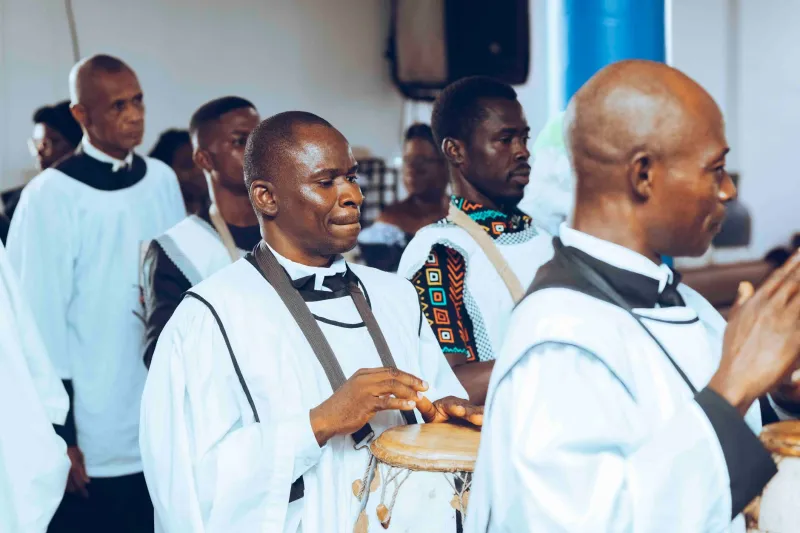
Across wellness studios, community centers, and retreat spaces throughout the United States, a profound and ancient form of medicine is finding new ground. African drum ceremonies — rooted in traditions stretching back millennia — are drawing thousands of Americans into circles of rhythm, breath, and collective restoration. This is not merely a wellness trend; it is the return of something the body has always remembered.
A Tradition Older Than the Written Word
Long before pharmaceutical interventions and clinical therapy sessions, the peoples of West and Central Africa understood something essential about the human nervous system: it responds to rhythm. Among the Dagomba of northern Ghana, master drummers known as lunsi have carried the responsibility of spiritual and communal healing for generations. In the Yoruba tradition of Nigeria and Benin, the batá drum is considered a sacred instrument inhabited by divine energy, used in ceremonies honoring the orisha — spiritual forces that govern the natural and human world.
The Ewe people of Ghana and Togo developed intricate polyrhythmic drumming systems in which multiple patterns layer simultaneously, creating a sonic environment that practitioners describe as an auditory gateway to altered states of consciousness. These were not performances for passive audiences. They were participatory rituals designed to move energy through the body, summon ancestral presence, and restore balance to those who had fallen out of harmony with themselves or their community.
What Western medicine is only beginning to quantify, African spiritual traditions encoded into ceremonial practice thousands of years ago.
What the Science Is Beginning to Confirm
The field of neurological research has gradually caught up with what indigenous healers long observed. Studies conducted at institutions including Stanford University and the University of Washington have demonstrated that rhythmic drumming at specific tempos — particularly those between 4 and 7 beats per second — can induce theta brainwave states associated with deep relaxation, emotional processing, and heightened intuition. These are the same brainwave patterns observed during meditation and the hypnagogic state between waking and sleep.
Additionally, group drumming has been shown to lower cortisol levels, the hormone most directly associated with chronic stress. Research published in the journal Evidence-Based Complementary and Alternative Medicine documented significant reductions in anxiety and depression symptoms among participants who engaged in regular percussion circles over an eight-week period.
Yet practitioners who carry these traditions emphasize that the scientific framework, while validating, captures only a fraction of what is actually occurring. "When you enter the circle, you are not just stimulating your nervous system," explains Ama Owusu, a Ghanaian-American cultural educator and ceremonial drum circle facilitator based in Atlanta. "You are entering into a conversation with something much older than you. The drum is an ancestor. The rhythm is a language. And healing happens because you are finally speaking it."
The Circle Expands Across American Cities
From Brooklyn to Oakland, from Chicago's South Side to the retreat centers of Sedona, Arizona, African-rooted drum ceremonies have woven themselves into the fabric of American wellness culture with remarkable speed. Yoga studios are hosting monthly djembe circles. Grief counselors are incorporating West African rhythm work into bereavement support groups. Veterans' organizations in cities like Houston and Philadelphia have piloted drum ceremony programs to address post-traumatic stress, reporting outcomes that have surprised even skeptical clinicians.
Participants speak of experiences that resist easy categorization. "I walked in expecting something like a music class," recalls Marcus Thibodeau, a 44-year-old software engineer from Minneapolis who attended his first West African drum ceremony two years ago. "I walked out feeling like I had cried something out of my chest that had been there for years. I didn't even know I was carrying it."
For many African Americans, engagement with these ceremonies carries a particular resonance. The drum was one of the primary cultural instruments suppressed during the transatlantic slave trade — colonial authorities recognized its communicative and organizing power and enacted legislation to silence it. To sit within a circle of drumming today is, for many, an act of conscious reclamation.
Navigating the Question of Cultural Integrity
The growing popularity of African drum ceremonies in predominantly white wellness spaces has prompted necessary and ongoing conversation about cultural integrity, respect, and appropriation. These are not abstract concerns. When ceremonial practices are extracted from their spiritual context and repackaged as generic stress-relief products, something essential is lost — and a community's sacred heritage is reduced to a commodity.
Practitioners and cultural scholars consistently emphasize several principles for those seeking authentic engagement. First, lineage matters. Participants are encouraged to seek out facilitators who have been properly trained within the tradition they are teaching — not simply individuals who attended a weekend workshop. Second, context must be honored. Understanding the spiritual framework from which a practice emerges deepens its efficacy and demonstrates respect for the culture that cultivated it. Third, compensation must flow back to source communities. Supporting African and African-American teachers, musicians, and cultural organizations ensures that the tradition's living carriers benefit from its wider dissemination.
"I welcome people from all backgrounds into the circle," says Kofi Mensah, a certified djembe master and ceremonial leader who conducts workshops throughout the Pacific Northwest. "But I ask that they come with humility, with curiosity, and with willingness to learn. The drum will teach you what you need to know — but only if you approach it as a student, not a consumer."
Entering the Circle With Intention
For those drawn to explore African percussion ceremonies, the entry points are more accessible than ever. Community drum circles, often listed through Meetup groups or local cultural centers, provide a low-barrier introduction. Many African cultural organizations — including branches of the African Studies Association and diaspora community centers in major cities — offer structured programs that pair rhythmic instruction with cultural and historical education.
For deeper engagement, residential retreats led by master practitioners from Ghana, Senegal, Guinea, and Nigeria offer immersive multi-day experiences that integrate drumming with dance, ancestral veneration practices, and ceremonial context.
What the ancient traditions of Africa have always understood, and what an increasing number of Americans are now discovering, is that rhythm is not decoration. It is medicine. It is memory. And in the shared pulse of a drum circle — where strangers become community and the body recalls something the mind has forgotten — healing becomes not a destination, but a homecoming.