When Plants Speak: The African Tradition of Plant Spirit Communication and Its Quiet Revolution in American Healing
In the courtyard of a healer's home in coastal Ghana, the first lesson given to an apprentice is not how to prepare a remedy. It is how to listen. Before any root is lifted from the earth, before any leaf is dried or decocted, the student must learn to be still—still enough to receive what the plant itself wishes to communicate. This practice, ancient in its origins and precise in its discipline, is now finding unexpected expression in American wellness communities, where a quiet but profound shift is underway in how people relate to the botanical world.
For many Americans, herbalism has long been understood as a science of chemistry: active compounds, therapeutic dosages, contraindications. That framework has value. Yet across African healing traditions—from the Yoruba practice of Osain worship in Nigeria to the nganga medicine systems of Central Africa and the plant-based ceremonial work of East African healers—an entirely different epistemology governs the relationship between healer and herb. Within these traditions, plants are not resources to be extracted but intelligences to be consulted. They are teachers, allies, and, at times, ancestors in their own right.
The Doctrine of Living Relationship
The concept of plant consciousness is not unique to Africa, but African traditions have developed some of the world's most sophisticated frameworks for engaging with it. Among the Yoruba, the orisha Osain is the divine custodian of all plant medicine, and no herb is considered truly efficacious unless it has been spiritually activated through prayer, song, and ceremonial protocol. To use a plant without acknowledging its spirit is, within this worldview, to use only half of what the plant offers—and perhaps to court imbalance in the process.
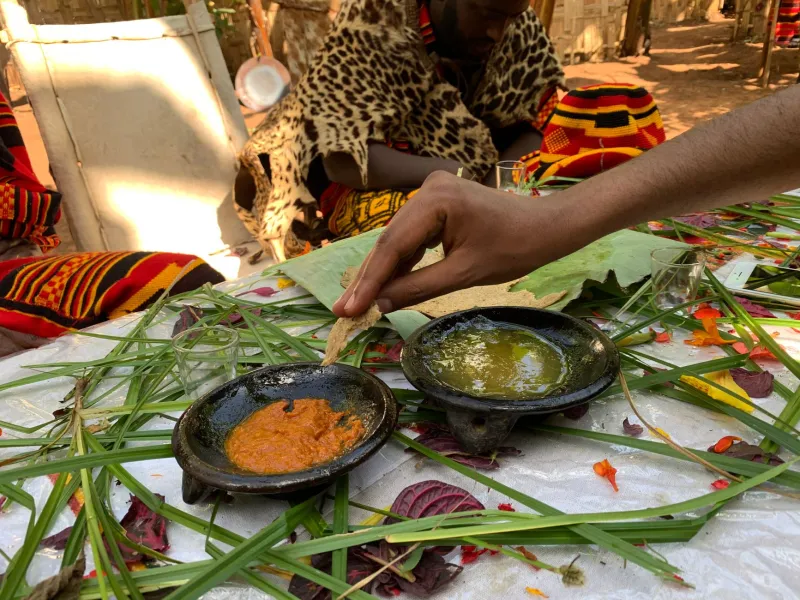
Similarly, in many East African healing traditions, plant gatherers observe protocols of approach that include verbal address, offerings of gratitude, and a period of receptive silence before harvesting. The healer does not simply take. She enters into a negotiation, a conversation, and she waits for what she describes as a sense of permission or readiness from the plant itself. Elders in these traditions speak of receiving diagnostic insights, formulation guidance, and even warnings directly from the plants they work with—communicated not through audible speech but through impression, image, and felt knowing.
This relational framework stands in deliberate contrast to extractive models of botanical medicine, and it is precisely this contrast that is drawing the attention of American practitioners who feel that something essential has been missing from their work.
American Practitioners and the Turn Toward Plant Consciousness
Across the United States, herbalists, energy workers, and integrative health practitioners are increasingly seeking training and mentorship that includes the spiritual dimensions of plant medicine. Workshops rooted in African and African diasporic traditions—many of them offered through cultural centers, diaspora organizations, and online learning communities—are drawing participants who describe themselves as feeling called to a deeper relationship with the plants they use.
For practitioners with African heritage, this turn is often experienced as a homecoming. For others, it is an encounter with a way of knowing that challenges the secular assumptions embedded in their previous training. In both cases, the learning tends to be transformative.
What these practitioners are being asked to develop is less a new skill than a new quality of attention. The ability to sit with a plant in silence. To observe its growth patterns, its preferred habitat, its seasonal rhythms. To speak to it with intention and then to notice what arises in response—not as fantasy or projection, but as genuine communication received through the body, the dream life, and the intuitive faculties that many Western frameworks have systematically devalued.
In the Ifa tradition of the Yoruba, divination itself is often used to determine which plants are appropriate for a given healing protocol, and the plants selected are understood to carry the blessings of specific orisha. An American practitioner studying within this lineage learns, therefore, not only which plants correspond to which spiritual forces, but how to cultivate a living relationship with those forces through consistent ceremonial engagement. The plant becomes a point of contact with something vast.
The Healer's Preparation as Spiritual Practice
One of the most striking aspects of African plant medicine traditions, for those encountering them for the first time, is the emphasis placed on the healer's own preparation. In many traditions, the practitioner's inner state is understood to directly affect the efficacy of the medicine she prepares. A healer who approaches her work in distraction, in unresolved grief, or in spiritual misalignment is not considered capable of producing the same results as one who has tended to her own relationship with the plant world through prayer, ceremony, and personal discipline.
This principle carries significant implications for American wellness culture, which has largely separated the practitioner's personal spiritual life from her professional practice. The African model insists on their integration. It suggests that the healer herself is a medium through which plant intelligence passes—and that the quality of that medium matters enormously.
Some American practitioners describe this understanding as the most challenging and the most liberating aspect of their training. Challenging, because it demands a level of personal accountability that extends well beyond professional certification. Liberating, because it restores meaning and sacred dimension to work that might otherwise feel mechanical.
Diaspora Traditions as Living Bridges
It is worth noting that African plant spirit traditions did not disappear during the Middle Passage. They survived, adapted, and took new form in the Americas—in Haitian Vodou, in Cuban Lucumí, in Brazilian Candomblé, in the root work traditions of the American South. These diaspora traditions have preserved and transformed African plant knowledge under conditions of extraordinary duress, and they represent a living lineage that many African Americans are now reclaiming as their own.
For African Americans engaging with plant spirit communication, the practice is often inseparable from the broader project of ancestral reconnection. To learn the language of plants is, in this context, to recover a form of knowledge that was systematically suppressed—and to honor the healers who kept it alive across centuries of prohibition and erasure.
This dimension of the work gives African plant spirit traditions a particular resonance in the American context. They are not simply an alternative wellness modality. They are a form of cultural and spiritual restoration.
A Different Kind of Pharmacy
The revolution that African herbalism is quietly seeding in American wellness is not primarily a revolution in which plants are used. It is a revolution in how practitioners understand their relationship to those plants—and, by extension, to the living world itself. When a plant is approached as a conscious ally rather than a passive ingredient, the entire therapeutic encounter is transformed. The healer listens differently. The patient is held differently. The medicine, many practitioners report, works differently.
Whether or not Western science will eventually find frameworks to account for these observations remains to be seen. What is clear is that a growing number of Americans—seekers, healers, and ordinary people in search of something more whole—are finding in African plant spirit traditions a way of engaging with the natural world that feels, in some essential sense, like remembering.