Facing the Unspoken: How African Divination Systems Are Confronting Americans with the Truths They Have Long Avoided
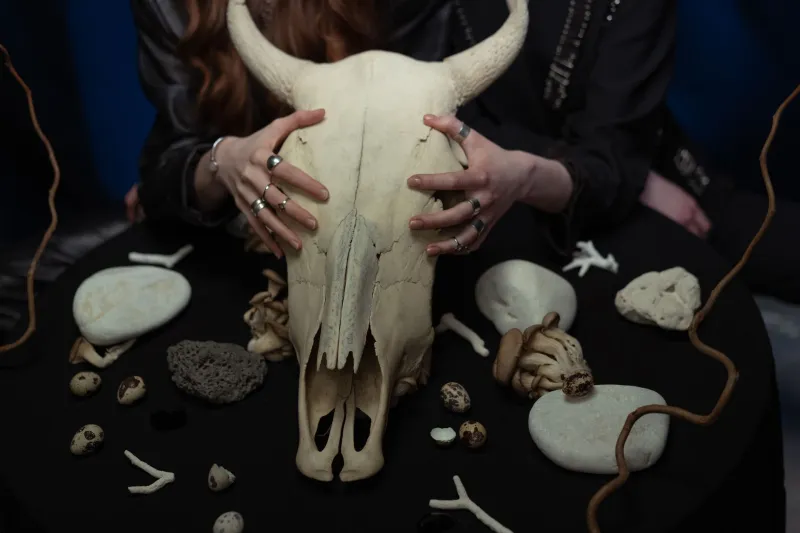
There is a particular discomfort that arrives when something ancient and precise looks directly at you. Not through you, not around you — at you. That is the experience many Americans describe the first time they sit before a practitioner of African divination. Whether the medium is a set of bones arranged on a cloth in a Chicago apartment, cowrie shells cast across a wooden board in Atlanta, or an Ifá reading conducted in a Houston community space, the encounter tends to produce the same unsettling sensation: the feeling of being seen in a way one had not consented to.
For a culture that has built an enormous industry around self-improvement — one that frequently prioritizes affirmation over examination — this quality of unflinching clarity is both the most challenging and the most compelling aspect of African divination traditions. It is also, practitioners and participants alike suggest, precisely why these systems are finding such fertile ground in the contemporary American spiritual landscape.
What Divination Actually Does
To understand why African divination resonates so deeply, it is necessary to first set aside the popular Western conception of what divination is. In mainstream American culture, the word tends to conjure images of fortune-telling: a figure peering into a crystal ball, offering predictions about love, money, or fate. African divination traditions operate according to an entirely different logic.
In systems such as Ifá — the Yoruba oracle tradition originating in what is now Nigeria — the practice is not principally concerned with predicting the future. It is concerned with diagnosing the present. The Babalawo, or divination priest, works not to tell a client what will happen, but to illuminate what is already occurring beneath the surface of their life: which ancestral patterns are active, which spiritual obligations have gone unmet, which internal contradictions are generating the difficulties a person experiences.
Similarly, in Southern African bone-casting traditions practiced by Sangomas, the bones — which may include animal bones, shells, coins, and other objects — are understood to speak through the practitioner as a collective voice of the ancestral realm. The arrangement in which they fall is not random; it is interpreted as a precise map of the forces, both seen and unseen, that are shaping a person's circumstances.
In both cases, the operative mechanism is not prophecy. It is disclosure.
The Mirror No One Ordered
What distinguishes African divination from most contemporary Western therapeutic or spiritual modalities is its fundamental refusal to be comfortable. In a culture saturated with wellness practices that emphasize gentleness, positivity, and client-centered validation, African oracular traditions maintain a different covenant with the seeker: the covenant of truth, delivered with care but without softening.
Practitioners describe clients arriving with a presenting concern — a troubled relationship, a stalled career, a persistent anxiety — only to find that the divination redirects attention to something they had not mentioned and, in many cases, had actively avoided acknowledging. A bone-casting session may reveal not that a relationship is failing because of an external circumstance, but because the client has been operating from a place of unhealed grief they have never named. An Ifá reading may indicate not that a career path is wrong, but that the client's relationship to their own worth has been distorted by inherited family narratives.
This is what practitioners and scholars of African spirituality refer to when they speak of divination as a mirror. It does not show the seeker what they wish to see. It shows them what is there.
Shadow Work with Ancestral Roots
The language of shadow work — popularized in Western psychological circles through the influence of Carl Jung and later expanded by contemporary therapists and spiritual teachers — has become increasingly common in American wellness culture. The concept refers broadly to the process of examining the unconscious aspects of the self: the impulses, wounds, and patterns that operate beneath conscious awareness and drive behavior in ways the individual does not fully understand.
What many Americans are discovering, often with considerable surprise, is that African divination traditions have been engaged in something functionally analogous to shadow work for centuries — and doing so with a sophistication that contemporary frameworks are only beginning to approach.
The difference, however, is significant. Western shadow work, as it is commonly practiced, tends to locate the source of hidden patterns within the individual psyche. African divination systems situate the individual within a vastly larger web of relationship: with ancestors, with community, with spiritual forces, and with the accumulated consequences of choices made across generations. The shadow, in this framework, is not merely personal. It is ancestral, communal, and cosmic.
This expanded understanding proves, for many American seekers, both more challenging and more liberating than anything they have previously encountered. It is more challenging because it demands accountability not only to oneself but to a lineage. It is more liberating because it offers a context — and a pathway — that extends far beyond the isolated self.
Why Americans Are Seeking This Now
The surge of interest in African divination traditions among Americans across racial and cultural backgrounds is not occurring in a vacuum. It is emerging at a moment of profound collective uncertainty — a period marked by institutional distrust, widespread disillusionment with mainstream self-help culture, and a growing hunger for spiritual frameworks that can hold complexity without collapsing it into easy answers.
For African American communities in particular, engagement with these traditions carries an additional dimension of meaning. Divination practices were among the many spiritual inheritances severed by the violence of the transatlantic slave trade. Reconnecting with them is, for many, an act of profound restoration — a reclamation of ancestral knowledge that was systematically suppressed but never entirely extinguished.
For Americans of other backgrounds drawn to these traditions, practitioners frequently emphasize the importance of approaching African divination with genuine respect and a willingness to be accountable — not as consumers of an exotic spiritual product, but as students of a living wisdom tradition that demands seriousness in return for its gifts.
The Accountability the Self-Help Industry Cannot Offer
Perhaps the most striking observation made by those who have engaged seriously with African divination systems is this: these traditions do not allow the seeker to remain a passive recipient. They require a response. An Ifá reading, for instance, typically concludes not with a forecast but with a prescription — specific actions, offerings, or behavioral changes that the oracle indicates are necessary for the seeker's alignment and wellbeing.
This quality of active accountability is, for many Americans, radically unfamiliar. A culture accustomed to consuming self-help content without necessarily changing anything finds in African divination a tradition that closes that gap. The oracle does not merely diagnose. It assigns responsibility.
That responsibility, rooted in the understanding that each person exists in living relationship with their ancestors, their community, and the spiritual forces that animate existence, is ultimately what these ancient systems are transmitting. Not a comfortable reflection, but an honest one. Not a prediction of what may come, but a clear accounting of what is — and what the seeker is being called, by forces older than any self-help bestseller, to do about it.
In a nation that has grown weary of mirrors that only show it what it wishes to see, the ancient mirrors of Africa are offering something rarer and more valuable: the truth.