Beyond Midnight Countdowns: How African Seasonal Ceremonies Are Offering Americans a More Sacred Path to Renewal
There is a particular hollowness that many Americans describe feeling in the days following New Year's Eve. The confetti has settled, the resolutions have been written, and yet something essential seems to have been skipped — some interior preparation that the noise and spectacle of the occasion never quite allowed. For a growing number of spiritual seekers across the United States, that missing element is finding its shape in the seasonal transition ceremonies of Africa, traditions that treat the threshold between cycles not as a calendar event, but as a sacred passage requiring genuine inner work.
A Continent of Calendars
To speak of African new year traditions is, necessarily, to speak in plural. The continent holds within it hundreds of distinct cultures, each with its own cosmological understanding of time, seasons, and the rhythms that govern human life. What these traditions share, however, is a fundamental conviction that the turning of a cycle is a moment of spiritual consequence — one that demands conscious participation rather than passive observation.
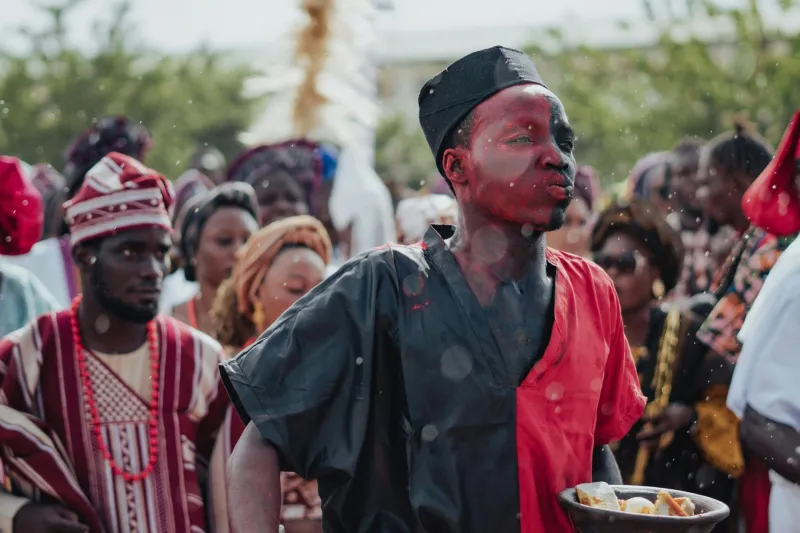
Among the Akan peoples of Ghana, the festival of Odwira marks a period of communal purification and ancestral remembrance that arrives not in January, but in alignment with the harvest season. Communities gather to cleanse sacred spaces, offer food to the ancestors, and collectively release the spiritual residue of the preceding year. The emphasis is not on individual ambition — on lists of personal improvements — but on the restoration of right relationship: with the land, with the dead, with one another.
In Ethiopia, the Enkutatash festival, which falls in September according to the Ethiopian calendar, greets the new year at the close of the rainy season, when the highlands bloom with yellow wildflowers and the air carries the particular quality of beginning. Children carry bouquets from door to door, priests sing through the night, and the community moves together into renewal as a single, interconnected body rather than as a collection of isolated individuals making private promises.
The Zulu tradition of Umkhosi Wokweshwama, the First Fruits ceremony, similarly locates renewal in relationship to the agricultural calendar — specifically, the moment when the new harvest is ready to be received. Before any individual may eat of the new crop, the community performs elaborate ceremonies of purification, gratitude, and ancestral acknowledgment. The threshold is crossed together, or it is not truly crossed at all.
Time as a Living Organism
What distinguishes these African frameworks from the Western calendar tradition is, at their root, a fundamentally different understanding of what time is. In much of the dominant American cultural context, time is linear — a straight road moving from past to future, with the new year functioning as a mile marker. One year ends; another begins. The slate is wiped clean by the turn of a digit.
African cosmological traditions, broadly speaking, tend to understand time as cyclical and relational — a living organism that breathes, contracts, expands, and renews itself in rhythms that mirror the natural world. The agricultural calendar is not merely a practical tool for planting and harvesting; it is a spiritual map, a guide to when the membrane between the visible and invisible worlds grows thin, when the ancestors draw near, when the earth itself is most receptive to human intention.
This distinction carries profound implications for how renewal is approached. If time is cyclical rather than linear, then there is no single, arbitrary threshold that separates the old from the new. Instead, there are multiple thresholds throughout the year — solstices, equinoxes, harvest moments, rainy seasons — each carrying its own spiritual character and demanding its own form of acknowledgment.
What American Seekers Are Finding
For many Americans — particularly those of African descent engaged in ancestral reclamation practices, but also a broader population drawn to indigenous spiritual frameworks — these traditions are offering something the January 1st ritual has never quite delivered: a sense that renewal is earned through genuine inner preparation rather than simply declared at midnight.
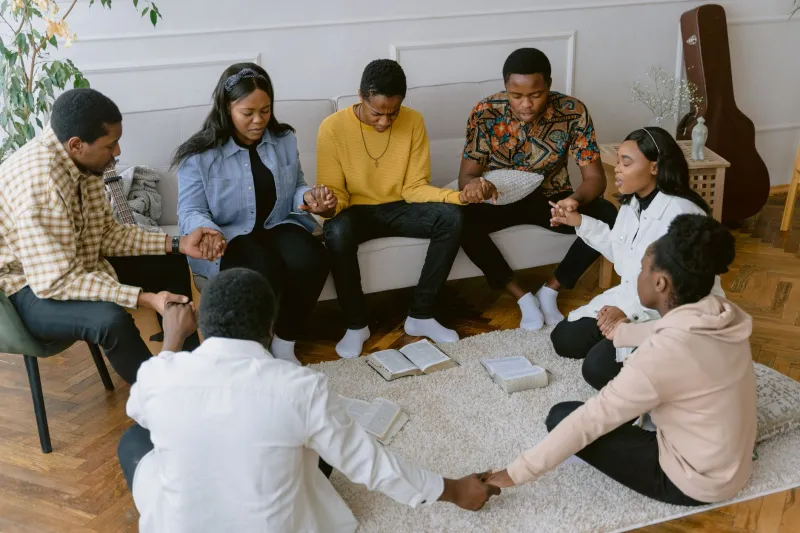
Practitioners across the country describe incorporating elements of African seasonal ceremony into their own lives in ways that are both personally meaningful and culturally respectful. Some have established seasonal altar practices that shift with the agricultural year, marking the autumn harvest with offerings of food and libation in the tradition of West African first fruits ceremonies. Others have adopted the practice of communal purification — gathering with family or chosen community to collectively name what must be released before a new cycle can be fully entered.
The concept of spiritual purification before renewal is particularly resonant for those who have found the resolution tradition inadequate. In many African ceremonial contexts, one does not simply decide to become different; one undergoes a process of cleansing — physical, spiritual, and relational — that creates the interior conditions necessary for genuine transformation. The work precedes the declaration, rather than following it.
The Role of the Ancestors in Seasonal Transition
Perhaps the most striking departure from the Western new year tradition is the central role that ancestral presence plays in African seasonal ceremonies. In the Akan Odwira, in the Zulu Umkhosi, in the Ethiopian Enkutatash, and in countless other traditions across the continent, the turning of the cycle is understood as a moment when the living and the dead stand in particular proximity to one another.
This proximity is not regarded with fear, but with reverence and gratitude. The ancestors are consulted, fed, and invited to participate in the renewal of the community they helped to build. Their wisdom is understood as essential to the navigation of what lies ahead — not as abstract inspiration, but as living guidance transmitted through ceremony, dream, and divination.
For Americans who have grown up in a culture that largely severs the connection between the living and the dead, treating death as a terminus rather than a transition, this aspect of African seasonal tradition can be quietly revolutionary. The idea that renewal is not a solitary act of willpower, but a communal endeavor undertaken in the company of those who came before, offers a fundamentally different — and for many, far more sustaining — vision of what it means to begin again.
Entering the Threshold with Intention
The African seasonal traditions examined here do not offer a simple template for adoption. They are rooted in specific cultural, ecological, and cosmological contexts that deserve to be honored in their particularity. What they do offer, to those who approach them with genuine curiosity and appropriate humility, is an expanded vision of what renewal can be.
A threshold, in the spiritual traditions of many African cultures, is not merely a line to be crossed. It is a sacred space of transformation — a place where the self that has been is invited to release its grip, and the self that is becoming is invited to step forward. That release requires preparation. It requires community. It requires an honest reckoning with what the preceding cycle has asked of us and what it has left behind.
As the calendar industry readies itself for another season of resolutions and fresh-start marketing, these ancient African frameworks quietly offer something more demanding — and more nourishing. Not the promise of effortless reinvention at the stroke of midnight, but the invitation to do the interior work of genuine renewal, in alignment with the rhythms of the living earth, in the company of the ancestors, and in right relationship with the community of the living.
The threshold, these traditions remind us, is always available. The question is whether we are willing to cross it with intention.