Roots That Remember: How African Herbal Traditions Are Calling American Families Back to Their Healing Inheritance
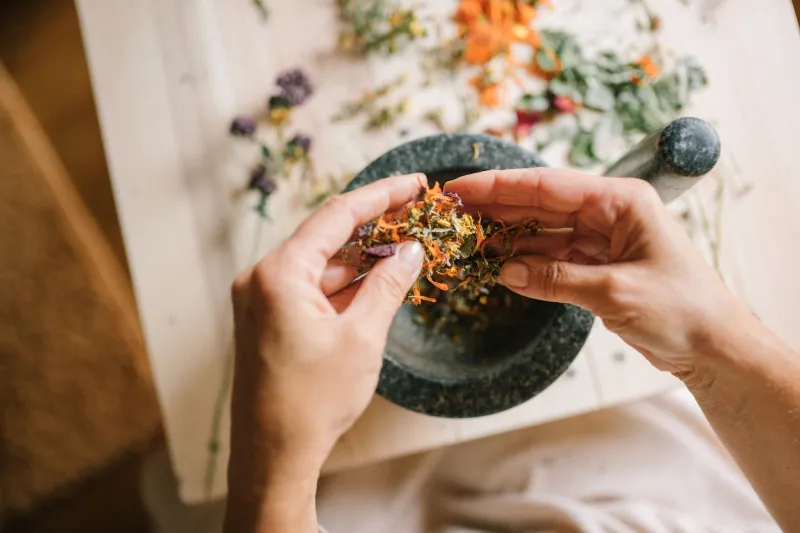
In a modest kitchen in Atlanta, a woman named Delores spreads dried leaves across a wooden board worn smooth by decades of use. The board belonged to her grandmother, and before that, to her grandmother's mother. The herbs — bitter leaf, moringa, and a root she learned to identify only after years of careful study — were sourced from a small importer who works directly with herbalists in West Africa. Delores is not a licensed physician. She is something older: a keeper of botanical memory.
"My grandmother used to say that the plants know who you are," she recalls. "She said they remember your people even when you've forgotten them."
This sentiment, quietly poetic and rooted in a worldview that predates modern pharmacology by millennia, is finding renewed resonance among Americans who are returning to African herbal traditions not merely as an alternative to conventional medicine, but as a form of ancestral communion.
A Tradition That Survived the Middle Passage
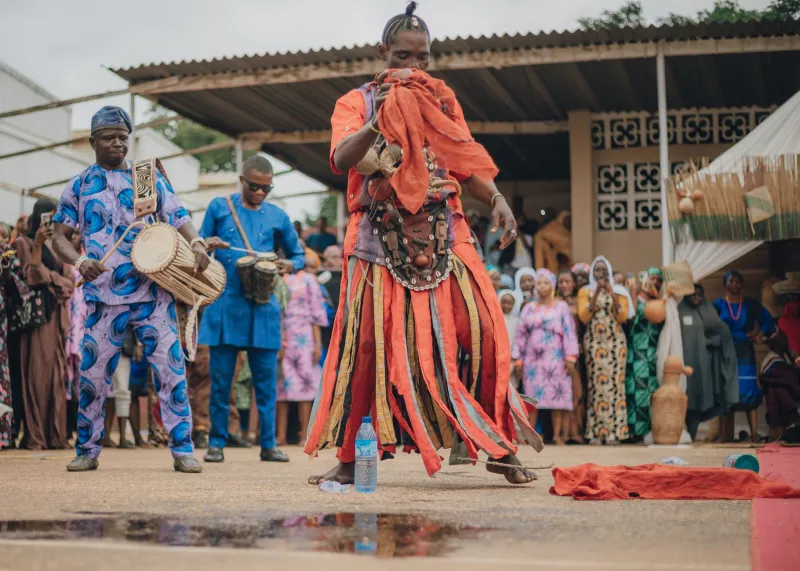
African herbalism is among the most sophisticated and enduring systems of botanical knowledge in the world. Across the continent's diverse civilizations — from the Yoruba of what is now Nigeria to the Zulu of southern Africa, from the Akan of Ghana to the Hausa of the Sahel — healers known variously as babalawos, sangomas, ngangas, and dibia have for centuries maintained intricate understandings of plant chemistry, spiritual ecology, and the relationship between human illness and ancestral imbalance.
When enslaved Africans were forcibly transported to the Americas, they carried this knowledge with them — concealed in memory, encoded in practice, and passed through whispered instruction across generations. Historians of African American medicine have documented how enslaved healers drew upon botanical traditions from their homelands to treat illness on plantations, often blending African knowledge with the plant medicine of Indigenous Americans and, later, European folk remedies. The result was a syncretic healing tradition of remarkable depth and adaptability.
Yet the systematic destruction of African cultural identity — through the prohibition of language, the suppression of spiritual practice, and the deliberate severing of family ties — meant that much of this knowledge was fragmented or lost entirely. What survived often did so without its original context, stripped of the spiritual frameworks that gave it full meaning.
The Spiritual Architecture of Plant Preparation
For those now engaged in reclaiming these traditions, the most significant discovery is frequently not the plants themselves, but the ceremonial understanding that surrounds their use. In many African healing systems, the preparation of a remedy is inseparable from the spiritual intentions of the healer. The manner in which a plant is harvested — at what hour, during which lunar phase, with what words spoken — is considered as consequential as the plant's chemical properties.
Among the Yoruba, for instance, the orisha Osanyin is regarded as the divine custodian of plant medicine. Healers working within this tradition do not approach botanical remedies as inert substances but as living entities animated by spiritual force. To prepare a remedy without the appropriate prayers, offerings, or ritual acknowledgment is understood not merely as incomplete practice but as a form of disrespect that may render the medicine ineffective or even harmful.
This perspective stands in striking contrast to the dominant framework of Western biomedicine, in which the efficacy of a treatment is considered entirely independent of the psychological or spiritual state of the practitioner. For Americans raised within that framework, encountering the African understanding of medicine as relationship — between healer, plant, patient, and ancestor — can be genuinely transformative.
"I grew up thinking herbs were just supplements," says Marcus, a thirty-eight-year-old from Chicago who began studying Ghanaian herbal traditions after his father's death. "When I started learning the Akan way of working with plants, I realized I had been treating them like products. They're not products. They're people, in a sense. They have relationships with your family line."
Specific Remedies, Specific Remembrances
Certain plants have become focal points for this broader movement of reclamation. Moringa oleifera, native to sub-Saharan Africa and long used across the continent to treat malnutrition, inflammation, and infection, has gained significant visibility in American wellness culture — though practitioners of African herbal traditions are careful to distinguish between its commodified supplement form and its ceremonial use within intact healing lineages.
Bitter leaf (Vernonia amygdalina), used widely in West and Central Africa to address fever, digestive disturbance, and immune depletion, is another plant that diaspora communities are actively reintegrating into household practice. For many families, the experience of preparing a bitter leaf tea using a recipe passed down through oral tradition carries an emotional weight that transcends the medicinal. It is, as one practitioner described it, "a way of sitting with your great-great-grandmother in the kitchen."
Osun bark, associated in Yoruba tradition with the orisha of the same name and used in preparations related to feminine health and fertility, has become a subject of particular interest among African American women exploring ancestral healing as a complement to reproductive healthcare. The spiritual dimensions of this engagement — honoring a divine feminine principle through the physical act of botanical preparation — represent a form of healing that addresses trauma held not only in individual bodies but across generations of women.
Bridging the Atlantic, One Remedy at a Time
One of the most consequential dimensions of this movement is its capacity to forge living connections between diaspora communities in the United States and herbalists, healers, and spiritual practitioners on the African continent. A growing number of American seekers are traveling to Ghana, Nigeria, Senegal, and other nations specifically to study with traditional healers — not as tourists but as students committed to responsible, long-term apprenticeship.
Conversely, African practitioners are increasingly engaging with diaspora communities through workshops, online instruction, and collaborative research projects that document endangered botanical knowledge before it is lost entirely. Organizations working at this intersection describe their mission in terms that are simultaneously cultural, spiritual, and ecological: preserving not merely recipes but entire cosmologies of relationship between human communities and the plant world.
For families navigating this reconnection, the experience is frequently described in terms of healing that extends far beyond the physical. The act of recovering ancestral botanical knowledge — of learning to name a plant in a language your grandparents were punished for speaking, of preparing a remedy using gestures that echo across centuries — addresses a form of wound that no pharmaceutical intervention can reach.
The Inheritance No One Can Take
Delores finishes preparing her bitter leaf preparation and sets it aside to steep. On the wall above the stove hangs a photograph of her grandmother, taken sometime in the 1950s, standing in a garden. Beside it, she has placed a small clay vessel — an offering to the ancestors who carried this knowledge forward through conditions of extraordinary brutality.
"Medicine is memory," she says quietly. "When you make a remedy your grandmother made, you're not just healing your body. You're telling the ancestors that what they carried wasn't lost. That it arrived. That it matters."
In that gesture — the hands moving through familiar motions, the plants releasing their fragrance into a kitchen that has become, however briefly, a kind of temple — something ancient and essential is being restored. Not merely a recipe. A relationship. A lineage. A form of knowing that survived the unsurvivable, and is now, leaf by leaf and root by root, coming home.