Staying with the Dead: How African Mourning Traditions Are Challenging America's Obsession with Moving On
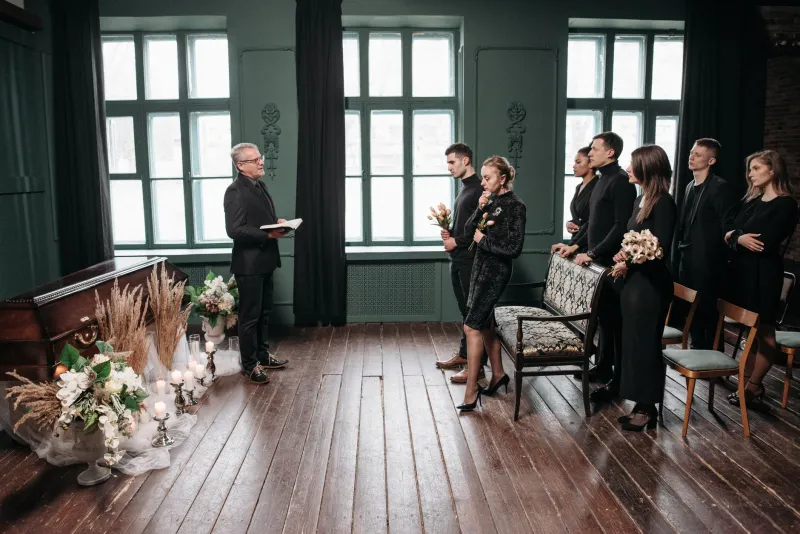
America has long maintained an uneasy relationship with grief. The dominant cultural script is familiar: attend the funeral, accept the condolences, take a few days away from work, and then—quietly, efficiently—resume the business of living. Bereavement leave policies rarely extend beyond a week. Therapists speak of "stages" to be completed. Friends, however well-meaning, grow impatient after the first month. The message, spoken or not, is consistent: move on.
Yet across the African continent, a vastly different understanding of loss has endured for millennia. In dozens of distinct traditions—from the Akan of Ghana to the Zulu of South Africa, from the Yoruba of Nigeria to the Luo of Kenya—mourning is not a private wound to be managed and minimized. It is a communal act, a sacred obligation, and in many cases, a celebration that can unfold over days, weeks, or even years. The deceased, far from being consigned to the past, often remain active participants in the spiritual life of the family.
For a growing number of Americans—particularly those of African descent reconnecting with ancestral heritage, but also practitioners from entirely different backgrounds—these traditions are offering something the modern grief industry rarely provides: the freedom to truly sit with loss.
The Community as Witness
One of the most striking features of African mourning traditions is the central role of communal witness. In many West African cultures, grief is understood as something that cannot, and should not, be borne alone. When a member of the community dies, the response is collective and immediate. Neighbors arrive. Extended family travels from distant regions. Food is prepared in quantities that could feed an entire village, because an entire village is precisely what comes.
This gathering serves a purpose that goes beyond social obligation. In Yoruba tradition, the presence of the community around the bereaved is understood as a spiritual act—the living forming a protective circle around those most vulnerable to the destabilizing force of loss. The grief of the individual is held, quite literally, by the bodies and voices of others. Mourners sing together, speak the name of the deceased aloud and repeatedly, and share stories that keep the person's spirit present in the room.
Compare this to the typical American experience of loss, where a funeral service might last ninety minutes and the bereaved are often left alone within forty-eight hours of the burial. The contrast is not merely logistical. It reflects a profound philosophical difference about what grief requires and what the community owes its members in their darkest moments.
Time as a Form of Respect
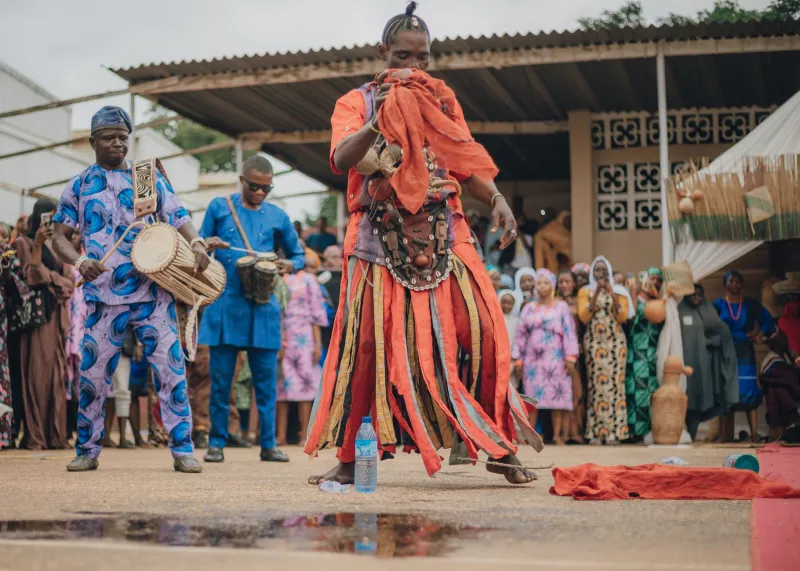
In many African traditions, the length of mourning is itself a measure of the love and esteem in which the deceased was held. Among the Luo people of Kenya, mourning periods for an elder can extend for weeks, with specific rituals marking each phase of the transition. The Akan of Ghana observe elaborate funeral celebrations—often held weeks or months after the burial itself—that can last for an entire weekend and draw hundreds of participants. These are not somber affairs conducted in hushed tones; they are vibrant, music-filled gatherings in which the life of the deceased is honored with the full force of communal expression.
The extended timeline serves a psychological and spiritual function that modern grief counselors are only beginning to appreciate. It communicates to the bereaved that their loss is significant enough to warrant sustained attention. It creates structured opportunities to return to grief rather than suppressing it after a single ceremonial event. And it acknowledges that the process of integrating loss into one's life is not a linear progression toward "recovery" but a recurring, cyclical engagement with absence.
American practitioners who have incorporated these frameworks into their own mourning processes often describe a profound sense of relief. One participant in a community grief circle in Atlanta, drawing on Akan funeral traditions, described it this way: "I had been told, in a hundred different subtle ways, that I was grieving too long, too loudly, too visibly. Learning that there were traditions where my grief would have been considered entirely appropriate—even honored—changed something fundamental in how I understood my own experience."
The Deceased as Ongoing Presence
Perhaps the most countercultural element of African mourning traditions, from a Western perspective, is the refusal to treat death as a definitive ending of relationship. Across many African spiritual systems—including those rooted in Vodun, Ifa, and various forms of ancestral veneration—the deceased do not simply cease to exist. They transition into a different mode of being, one that remains intimately connected to the living family.
This understanding has profound implications for how mourning is practiced. Rather than being oriented toward the eventual cessation of grief, rituals in these traditions are often designed to establish a new form of relationship with the one who has died. Offerings are made at household shrines. The name of the deceased is spoken during family meals. Significant decisions—marriages, births, business ventures—are brought before the ancestors for guidance and blessing. The dead, in this framework, are not gone. They are simply elsewhere, and the work of mourning includes learning how to maintain connection across that threshold.
For many African Americans engaged in the work of spiritual reclamation, this dimension of ancestral tradition has proven particularly resonant. In a community whose history includes the systematic severing of ancestral ties through the violence of enslavement, the practice of maintaining active relationship with the deceased carries a weight that extends well beyond individual bereavement. It becomes an act of cultural restoration.
Adapting Ancient Frameworks in American Life
The integration of African mourning traditions into American life is not occurring through wholesale cultural transplantation. Practitioners across the country are engaging in thoughtful, often deeply personal processes of adaptation—drawing on the principles and philosophies of these traditions while finding forms that are workable within contemporary American contexts.
Some communities are extending the time given to mourning by organizing gatherings in the weeks and months following a death, rather than treating the funeral as the singular moment of collective grief. Others are creating household altars that keep the presence of deceased loved ones visible and active in daily life. Grief circles modeled on the communal witness practices of West African traditions are emerging in cities including Chicago, New York, and Los Angeles, offering participants the experience of being held in their loss by a community rather than facing it in isolation.
Therapists and grief counselors who work with clients of African heritage—and increasingly, with clients from other backgrounds drawn to these frameworks—are noting a meaningful shift in how their clients relate to bereavement when given permission to grieve on African-influenced terms. The pressure to "move on" diminishes. The sense of failure that so often accompanies prolonged grief begins to dissolve. In its place, something more sustainable and more honest tends to emerge.
What the Ancestors Understood
The wisdom embedded in African mourning traditions is not mystical in the sense of being inaccessible or exotic. It is, at its core, a deeply practical recognition of what human beings actually need when they lose someone they love. They need time. They need witnesses. They need permission to feel what they feel without a deadline. And they need a way of understanding loss that does not require them to pretend that the person they loved has simply ceased to matter.
In a society that has industrialized even grief—packaging it into stages, scheduling it into calendar blocks, and measuring its resolution by the speed of one's return to productivity—these ancient African traditions offer something quietly radical. They insist that loss deserves to be honored fully, that the dead deserve to be remembered actively, and that the living deserve the sustained support of their community as they learn to carry what cannot be set down.
For those Americans willing to sit with that wisdom, the threshold of grief becomes not a doorway to pass through as quickly as possible, but a sacred space in which something essential about love, community, and the continuity of life can be more fully understood.