Listening as a Sacred Act: How African Traditions of Intentional Silence Are Offering Americans a Path Through the Noise
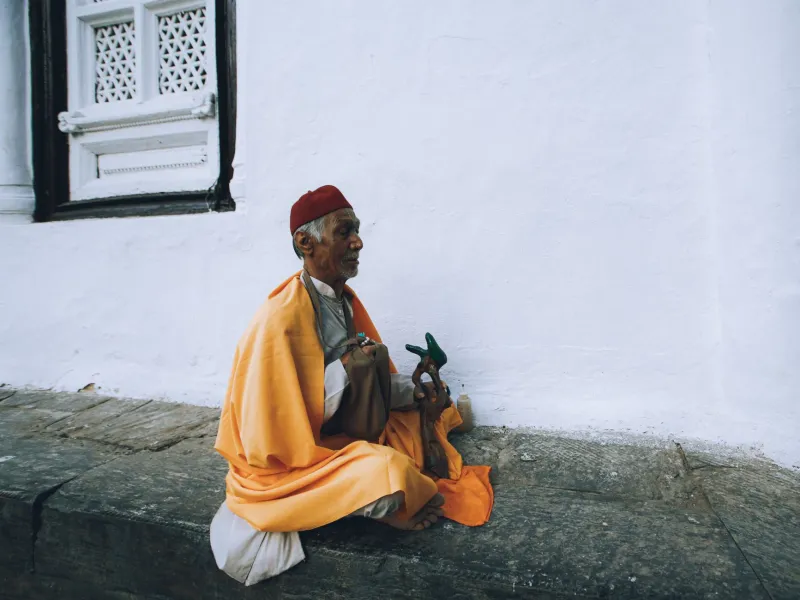
In the United States, silence has become something of a cultural rarity. Notifications arrive before dawn. Podcasts fill commutes. Background music colonizes coffee shops, restaurants, and waiting rooms with remarkable efficiency. The average American adult, according to research from the University of California, San Diego, processes the equivalent of 34 gigabytes of information daily — a figure that has more than doubled in the past two decades. Against this backdrop, a growing number of seekers are turning toward something ancient, something drawn from the contemplative traditions of Africa, where silence was never considered empty but was instead regarded as the very medium through which wisdom travels.
This is not the silence of avoidance or withdrawal. It is, as practitioners of African spiritual traditions will tell you, the silence of attentive readiness — a deliberate orientation of the whole self toward something larger than thought.
Silence as Spiritual Architecture
To understand how African traditions approach silence, one must first set aside the Western tendency to frame contemplative practice as a primarily interior, individualistic exercise. In much of African spiritual life, silence is relational. It exists between the practitioner and the ancestors, between the seeker and the earth, between the human community and the invisible world that surrounds it.
Among the Maasai people of Kenya and Tanzania, young warriors — known as moran — undergo extended periods of solitary stillness during certain rites of passage. These are not passive experiences. The moran is expected to listen with acute attention to the landscape around him: the quality of wind through acacia trees, the movement of animals, the particular quality of light at different hours. This listening is understood as a form of communion with both ancestral guides and the living intelligence of the natural world. Silence, in this context, is a disciplined skill, one that must be cultivated over years rather than achieved in a single weekend retreat.
Further north, in the Sufi brotherhoods of Senegal, Mali, and Sudan, a practice known as muraqaba — often translated as "watchfulness" or "meditation" — invites practitioners into states of profound inner quiet. Unlike the breath-focused techniques popularized in American wellness culture, muraqaba is oriented toward the heart rather than the mind. The practitioner does not attempt to empty awareness but rather to fill it with a quality of receptive attention, opening the inner ear, as teachers describe it, to the voice of the divine. The Tijaniyya and Qadiriyya orders, both deeply rooted in West African soil, have transmitted these methods for centuries, embedding them within a rich framework of communal devotion and ethical life.
What Distinguishes African Contemplative Silence from Western Meditation
The contemporary American meditation landscape is vast and varied, ranging from secular mindfulness apps to Tibetan Buddhist retreats. Yet practitioners who have encountered African contemplative traditions frequently note a quality that sets them apart: the explicit acknowledgment of relationship.
In Westernized mindfulness, the practitioner is typically encouraged to observe thoughts and sensations without attachment, cultivating a kind of equanimous detachment. African traditions of sacred silence tend to move in a different direction. Silence is not a means of stepping back from relationship but of stepping more fully into it. When an elder among the Xhosa people of South Africa enters a period of intentional quiet before an important community decision, that silence is understood as an act of consultation — a reaching toward ancestral wisdom that cannot be accessed through ordinary speech or analytical thought.
This distinction carries meaningful implications for Americans who are drawn to these practices. The invitation is not simply to reduce mental noise, though that benefit is real and well-documented. It is to understand stillness as a form of listening that extends beyond the self, a posture of humility before forces and relationships that exceed individual comprehension.
What Modern Research Reveals
The physiological case for intentional silence has grown considerably stronger in recent years. A 2013 study published in the journal Brain Structure and Function found that two hours of silence per day prompted measurable cell development in the hippocampus, the region of the brain associated with memory, learning, and emotional regulation. Separate research from the Cleveland Clinic has linked regular periods of silence to reductions in cortisol levels, lower blood pressure, and improved immune function.
Perhaps more striking is what neuroscientists have observed about the brain's default mode network — the constellation of regions that activates during wakeful rest and undirected attention. Far from being dormant, this network is intensely active during silence, engaged in processes of memory consolidation, self-referential thought, and the integration of complex emotional experience. African contemplative traditions, it would appear, have long understood something that science is only beginning to articulate: that silence is not the absence of activity but the condition under which the deepest forms of inner work become possible.
Voices Carrying the Tradition Forward
Across the United States, a small but growing community of teachers and practitioners is working to make African contemplative silence accessible without stripping it of its cultural and spiritual depth. In cities including Atlanta, Chicago, and Washington, D.C., African-centered spiritual communities host regular gatherings that incorporate structured periods of communal silence, ancestor acknowledgment, and guided listening practices rooted in specific African traditions.
Malaika Serwaa, a Ghanaian-American spiritual teacher based in the Washington metropolitan area, describes her work as an effort to offer what she calls "the silence that holds." She draws on the Akan concept of sunsum — the personal spirit or soul — as a framework for understanding why stillness matters. "When we are always speaking, always consuming, always producing," she explains to participants in her workshops, "the sunsum cannot settle. It cannot hear itself. Silence is how we come back into alignment with who we actually are."
Practical Pathways for the American Seeker
For those who wish to explore African traditions of sacred silence without the benefit of direct community access, there are several meaningful entry points.
Begin with threshold moments. Many African traditions assign particular significance to liminal times — dawn, dusk, the transition between waking and sleep. Designating even five minutes of intentional silence at these junctures, understood as moments of heightened spiritual receptivity, can serve as a genuine beginning.
Reframe silence as listening, not emptying. Rather than attempting to clear the mind, adopt the posture of the attentive elder: ask, inwardly, what the silence itself wishes to communicate. This shift in orientation transforms the practice from an exercise in suppression to one of active receptivity.
Engage the natural world. Following the Maasai model, spend periods of silence outdoors, directing attention outward rather than inward. The sounds of wind, water, birdsong, and even urban ambience can become objects of contemplative attention when approached with the reverence these traditions prescribe.
Create a relational container. Light a candle, acknowledge those who came before you, and enter silence with the explicit understanding that you are not alone. This small act of framing aligns the practice with its African roots, where silence is always understood as a shared rather than solitary endeavor.
A Different Kind of Quiet
The ancient African understanding of silence as sacred architecture — as the dwelling place of ancestral wisdom, divine presence, and the deepest currents of the self — offers contemporary Americans something that no productivity tool or wellness subscription can provide. It offers a reason to be still that goes beyond stress reduction or cognitive optimization. It suggests that in the space between words, something is already speaking, and that the most important human skill may be learning, at last, to hear it.