When the Village Shapes the Child: How African Initiation Traditions Are Calling American Families to Reimagine the Passage into Adulthood
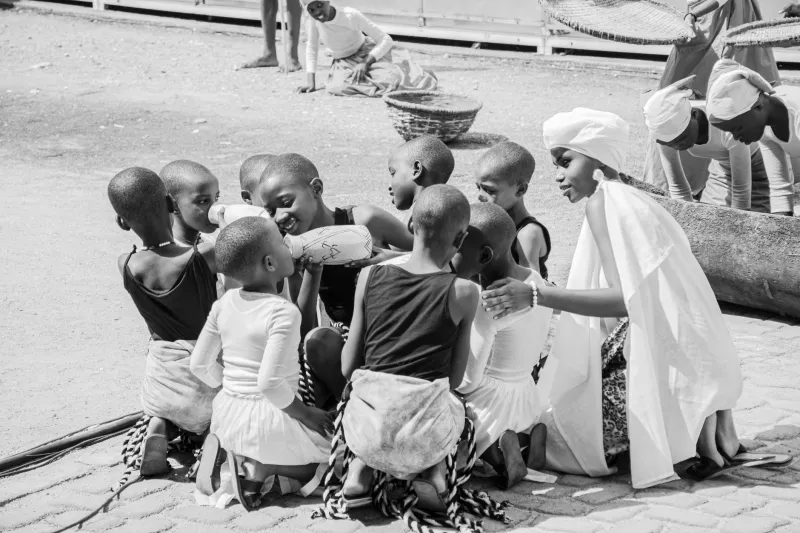
In the United States, the markers of adolescent transition are familiar and largely secular: a driver's license at sixteen, a high school graduation ceremony, perhaps a first apartment or college acceptance letter. These milestones carry genuine weight, but for many American families, something essential remains unnamed. The young person crosses from one room of life into another, and no one is standing at the door to say: we see you, we have prepared you, and you are ready.
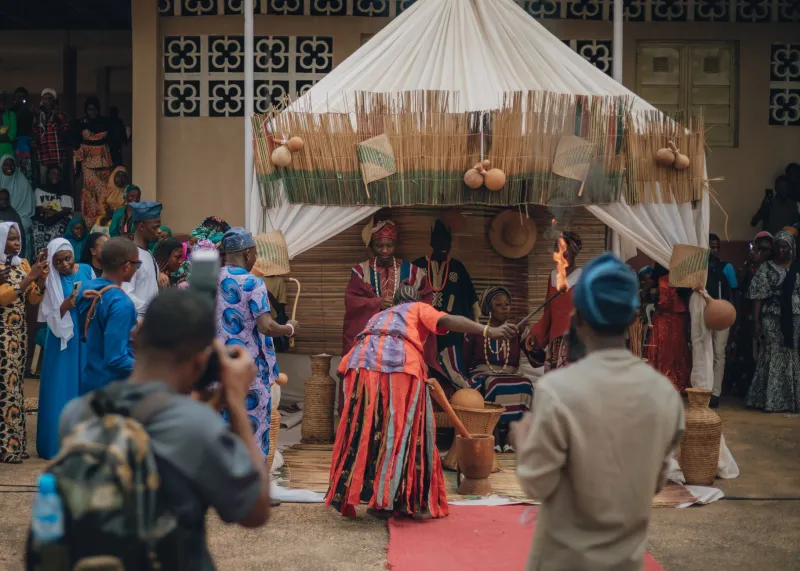
For generations across the African continent—from the Xhosa of South Africa to the Krobo of Ghana, from the Ndebele of Zimbabwe to the Sande societies of Sierra Leone—that doorway has been treated as one of the most sacred thresholds a human being will ever cross. Initiation was not incidental. It was the community's most deliberate act of love.
What Initiation Actually Means
Western popular culture has often reduced African initiation to its most dramatic surface elements: physical trials, weeks in the bush, elaborate body adornment. While these external forms vary enormously across cultures, the underlying architecture of traditional African initiation follows a recognizable pattern that anthropologists and spiritual scholars have studied with increasing seriousness.
At its core, initiation operates on three interlocking principles: separation, transformation, and reintegration. The young person is first removed—symbolically or literally—from their previous identity as a child. They are then placed in a liminal space, often under the guidance of elders and initiated mentors, where they are taught the responsibilities, spiritual knowledge, and community obligations that define adult life. Finally, they are welcomed back into the community in a new form, publicly recognized by all who know them.
This is not ceremony for ceremony's sake. The psychological function of this structure is profound. The young person does not simply age into adulthood—they are made into it, through intentional experience, communal witness, and sacred acknowledgment. The community, in turn, assumes responsibility for the person they have shaped.
"What African initiation understood, long before modern developmental psychology arrived at the same conclusion, is that identity requires a container," says one cultural scholar who has spent years studying West African rites of passage and their diasporic echoes. "When young people don't have that container, they build their own—sometimes in dangerous ways."
The Hunger Beneath the Graduation Stage
The absence of intentional initiation in mainstream American life is not merely a cultural curiosity. Adolescent psychologists have documented what many parents already sense: that teenagers in the United States are navigating identity formation in an environment that offers them almost no structured guidance about what it means to become an adult in a moral, spiritual, or communal sense.
Social media has made this gap more visible and more consequential. Young people now perform their identity development in public, before an audience of peers who are equally unanchored. The result, researchers suggest, is a generation that is technically more connected than any before it and yet profoundly uncertain about who they are and what they owe the world around them.
Into this vacuum, a quiet but growing movement of American families—many of them African American, though by no means exclusively—has begun reaching toward the initiation traditions of the African continent as a source of structural wisdom. They are not seeking to transplant ceremonies wholesale into American soil. They are asking a deeper question: What did those traditions understand about human development that we have forgotten, and how might we recover it?
Communities Doing the Work
In cities including Atlanta, Detroit, Philadelphia, and Oakland, community organizations rooted in African spiritual and cultural traditions have been designing rites-of-passage programs for adolescents that draw deliberately on initiation principles. These programs typically span months rather than a single evening, involving mentorship relationships with elders, structured periods of reflection and challenge, service obligations to the community, and culminating ceremonies in which the young person's transformation is formally witnessed.
One such initiative in Atlanta, grounded in the Akan concept of sankofa—the principle that one must understand the past to move wisely into the future—guides young men and women through a curriculum that weaves African philosophical traditions with practical skills, emotional literacy, and spiritual grounding. Participants speak of the experience in terms that echo the testimonies of initiated individuals across the African continent: a sense of being truly seen, of having earned something that cannot be taken away, of understanding for the first time what they are for.
Similar frameworks have emerged in interfaith and secular contexts as well. Some American families are designing their own home-based ceremonies, drawing on research into African traditions to create multi-day experiences that involve fasting, mentorship conversations, written reflections, and a final gathering in which family members and community elders speak directly to the young person about the gifts they have observed in them and the responsibilities they now carry.
The Role of the Elder
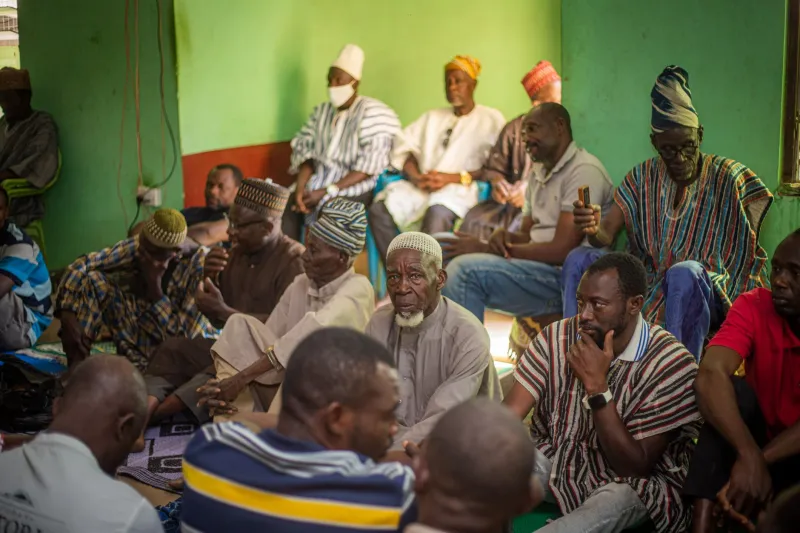
Perhaps the most radical element that African initiation traditions introduce into American conversations about adolescence is the indispensable role of the elder. In virtually every traditional African initiation framework, the process cannot function without the presence of someone who has already crossed the threshold—someone who carries knowledge that can only be transmitted through relationship, not through a screen or a curriculum.
This stands in sharp contrast to the dominant American model of adolescent development, which has increasingly privatized the mentorship function and relocated it to credentialed professionals or, more recently, to algorithms. African initiation wisdom insists that the community itself—its grandmothers, its spiritual practitioners, its experienced craftspeople and storytellers—is the irreplaceable vehicle of transmission.
For American families attempting to reconstruct something of this function, the challenge is real. Extended family networks have fragmented. Elders are often geographically distant or culturally disconnected from the traditions their grandchildren are reaching toward. And yet the hunger for elder wisdom among American adolescents is, by many accounts, acute. When intentional mentorship relationships are created, young people respond with a depth of engagement that surprises even their parents.
Honoring the Tradition Without Appropriating It
For American families who do not carry direct ancestral connection to the African traditions they are drawing upon, questions of cultural respect arise with legitimate urgency. Scholars and practitioners who work at this intersection are consistent in their counsel: approach with humility, seek relationship with practitioners from within the tradition, and prioritize the underlying principles over the surface forms.
The goal, as many community leaders articulate it, is not imitation but inspiration—allowing the structural wisdom of African initiation to illuminate what has been lost and to offer a framework within which something genuinely new, rooted in one's own ancestry and community, can be built.
"Every culture on earth once had these ceremonies," one Yoruba-trained practitioner based in Chicago has noted. "Africa kept them alive longest, and with the greatest sophistication. But the invitation is not to become African. The invitation is to remember that you, too, were once a people who knew how to make adults."
A Generation Waiting to Be Witnessed
There is something quietly urgent about this conversation. Across the United States, a generation of young people is moving through adolescence without anyone formally marking the passage, without elders who have been charged with their transformation, without a community that has publicly claimed responsibility for who they are becoming.
African initiation traditions do not offer a simple solution to this complexity. They offer something more demanding and more generous: a reminder that the shaping of a young human being is a sacred task, one that belongs not to institutions or to algorithms, but to the living community gathered around the child.
When that community chooses to show up—intentionally, ceremonially, with the full weight of its love and its expectations—something in the young person recognizes it. They have been waiting, as young people always have, for someone to stand at the threshold and say: we see you crossing over, and we are here.