The Living Word: How African Languages and Oral Traditions Are Awakening Spiritual Identity in America
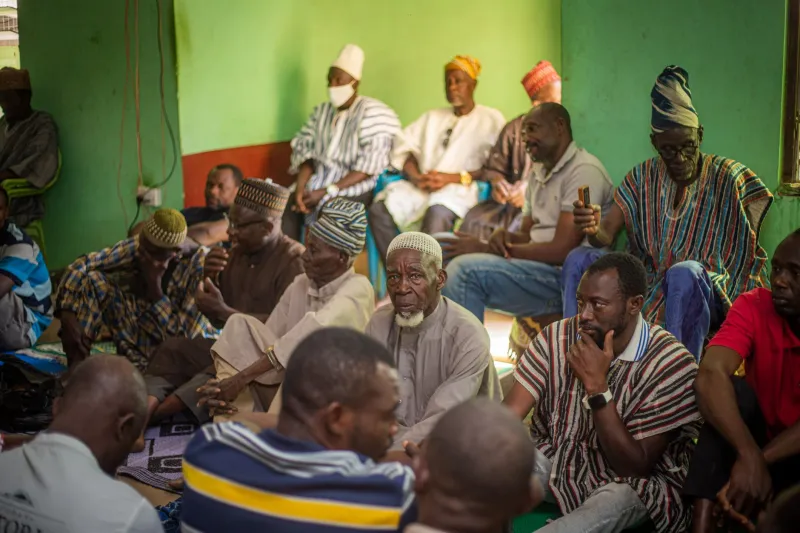
Something is stirring in the way Americans of African descent—and a widening circle of spiritual seekers—are using language itself as a pathway to healing. From Yoruba praise songs echoing through meditation spaces to Zulu call-and-response reverberating in community circles, African linguistic and oral traditions are emerging as powerful instruments of spiritual transformation in contemporary American life. In a nation still reckoning with the violence of cultural erasure, the act of speaking in ancestral tongues has become, for many, an act of profound reclamation.
When Language Carries Spirit
In many African philosophical and spiritual traditions, language is not simply a tool for communication. It is understood as a living force—a vehicle through which spiritual energy moves, relationships are formed, and reality itself is shaped. The Yoruba concept of àṣà, or cultural tradition, holds that words spoken in ritual contexts carry the weight of generations. Among the Akan, the role of the okyeame—often translated as linguist or spokesperson—is a sacred one, for words addressed to the divine must be handled with particular skill and care.
This is not metaphor. For practitioners of African-rooted spirituality, the vibrational quality of language, the specific sounds of a particular tongue, matters enormously. When Yoruba is spoken in a ceremony honoring the Orisha, the words are not merely descriptive. They are participatory. They summon, acknowledge, and activate. This understanding of language as spiritual technology is at the heart of what is drawing so many American seekers toward African linguistic traditions today.
Praise Poetry and the American Soul
One of the most visible expressions of this resurgence is the renewed interest in African praise poetry. Known as izibongo among the Zulu, oriki among the Yoruba, and by various names across dozens of other traditions, praise poetry is among the oldest and most sophisticated verbal art forms humanity has produced. It is not flattery. It is a precise, often improvisational form of verbal portraiture that traces lineage, names spiritual qualities, and calls the praised individual into their highest expression.
In American communities engaged in African spiritual practice, oriki and related forms are being taught, performed, and adapted with striking creativity. Workshops in cities including New York, Atlanta, Los Angeles, and New Orleans are introducing participants to the structure and purpose of praise poetry, inviting them to compose pieces honoring their own ancestors or community elders. For many participants, the experience is described as unexpectedly emotional—as though something dormant in the body responds to being addressed in this ancient form.
Poets and performers working within the African American literary tradition have long drawn upon this well. The call-and-response cadences of the Black church, the rhetorical structures of civil rights oratory, and the improvisational energy of spoken word poetry all carry the genetic memory of African oral tradition. What is new is the conscious, explicit naming of this lineage—the deliberate return to source.
Call-and-Response as Collective Healing
Few oral traditions have left as deep an imprint on American culture as call-and-response, the dynamic exchange between a leader and a group in which the community's reply completes the speaker's phrase. This structure, carried across the Atlantic through enslaved Africans, wove itself into gospel music, the blues, jazz, and hip-hop. It lives in the pews of Black churches and on the stages of concert halls. Yet its deeper spiritual mechanics—its function as a technology for collective attunement and communal healing—are only now being consciously explored by a new generation of practitioners.
In healing circles and community ceremonies, facilitators trained in African spiritual traditions are using structured call-and-response to move groups through grief, celebration, and transformation. The repeated exchange between leader and community creates a kind of resonance, a synchronized state in which individual participants feel held by something larger than themselves. Practitioners describe it as the verbal equivalent of a drum circle—a way of aligning the community's energy before deeper spiritual work begins.
The Reclamation of Tongue
For many African Americans, learning an African language is not simply an intellectual pursuit. It is an act of spiritual recovery. The systematic destruction of African languages during slavery—the deliberate separation of people who shared tongues, the punishment of those caught speaking their mother languages—represents one of the most profound forms of cultural violence in American history. To speak Wolof, Twi, Igbo, or Swahili today is, for many learners, to refuse that erasure.
Language learning programs rooted in this understanding are proliferating across the country. Community organizations, online platforms, and African cultural centers are offering instruction not merely in grammar and vocabulary but in the cultural and spiritual contexts that give these languages their full meaning. Students are encouraged to understand language as inseparable from worldview—to recognize that learning to speak Yoruba is, in some sense, learning to perceive the world through a Yoruba lens.
This dimension of language reclamation has particular resonance in spiritual communities. Practitioners who have studied African languages consistently report that using those languages in ceremony produces a qualitatively different experience than conducting the same ritual in English. Something shifts, they say. The words feel more precise, more weighted, as though they were always meant to carry this particular freight.
Storytelling as Spiritual Practice
Beyond formal ceremony and language study, African oral storytelling traditions are finding new life in American therapeutic and spiritual contexts. The griot tradition of West Africa—in which designated community historians and storytellers serve as living archives of collective memory—is influencing contemporary approaches to narrative healing, intergenerational trauma work, and community resilience building.
Practitioners and therapists drawing on this tradition emphasize that storytelling in the African sense is not passive entertainment. It is a communal act of meaning-making, one that locates the individual within a web of relationships extending backward through time and forward into the future. When a person is invited to tell their story—not as a confession or a case history, but as a thread in a larger tapestry—something in their relationship to that story changes. The suffering becomes legible. The resilience becomes visible. The ancestors become present.
The Voice as Inheritance
What unites these various expressions—praise poetry, call-and-response, language reclamation, oral storytelling—is a shared understanding of the voice as something inherited. The sounds we make, the traditions through which we make them, are not invented anew in each generation. They are received. They carry the breath of those who spoke before us.
In reclaiming African linguistic and oral traditions, American practitioners are not simply adding new tools to their spiritual practice. They are recovering a relationship with their own voices—learning to hear in them the echoes of something ancient, resilient, and alive. And in that recovery, many are finding what they had not known they were searching for: the sound of home.