Roots of Renewal: How Traditional African Botanical Knowledge Is Reshaping America's Wellness Landscape
Walk into any well-stocked health food store in Chicago, Los Angeles, or Atlanta today, and you are likely to encounter a quiet revolution unfolding on the shelves. Moringa capsules sit beside ashwagandha. Baobab fruit powder shares display space with acai. Shea butter formulations have long since graduated from specialty African import shops to mainstream cosmetic chains. What is less visible—and considerably more significant—is the deep cultural and ceremonial heritage from which many of these products originate.
For thousands of years across the African continent, plants were not merely nutritional supplements or cosmetic ingredients. They were sacred intermediaries between the human world and the realm of ancestors and spirits. Healers known by names such as inyanga in Zulu tradition, dibia among the Igbo of Nigeria, and nganga throughout Central African cultures maintained elaborate botanical knowledge systems passed down through generations of oral instruction, ritual apprenticeship, and ceremony. The moringa tree, now celebrated in Western wellness circles as a superfood, has long been revered in parts of West and East Africa as a plant of protection, vitality, and spiritual fortification.
From Sacred Grove to Supplement Aisle
The pathway from ceremonial plant use to commercial product is rarely straightforward, and it carries with it considerable cultural weight. Dr. Amara Osei, an ethnobotanist who divides her research time between Ghana and the University of Maryland, describes the current American wellness market's appetite for African botanicals as both an opportunity and a responsibility.
"There is genuine curiosity, and that curiosity has the potential to create meaningful cross-cultural exchange," she explains. "But when a plant that has been prepared with prayer, offered to ancestors, and administered within a community of care becomes an isolated ingredient in a mass-market product, something essential is being left behind—not just culturally, but often pharmacologically."
Her concern reflects a broader tension within the natural wellness industry. The isolation of active botanical compounds from their traditional preparation contexts can strip away what many African healing traditions consider inseparable from the plant's efficacy: the intention, the relationship between healer and patient, and the spiritual dimension of the remedy itself.
Yet practitioners working at the intersection of African traditional medicine and American wellness culture are finding creative, respectful ways to honor that fuller picture.
The Herbalists Bridging Two Worlds
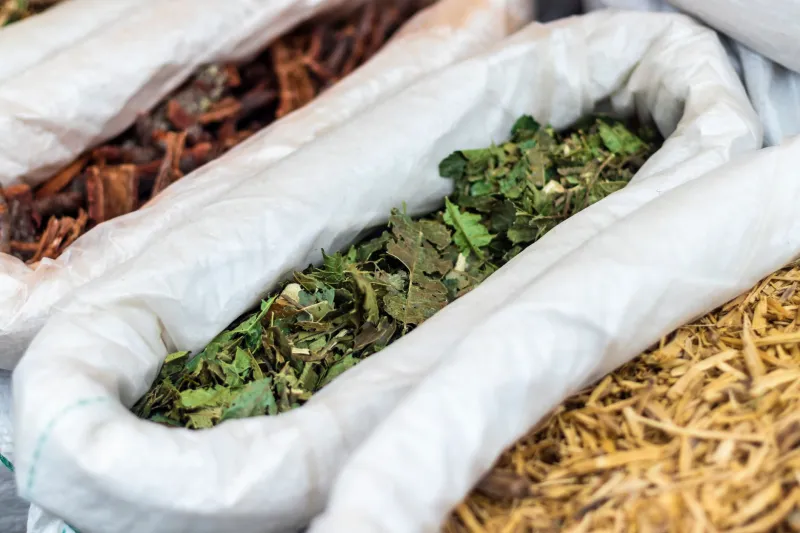
In Brooklyn, New York, Zola Mensah runs a small apothecary practice rooted in the botanical traditions of her Ghanaian grandmother. Her shelves hold hand-prepared tinctures, dried herb bundles, and ceremonial preparations that bear little resemblance to the standardized capsules found in chain pharmacies. Clients come to her not simply for a product but for a consultation—a practice that mirrors the relational model of traditional African healing.
"My grandmother would never have handed someone a plant without first understanding their spirit," Mensah says. "The plant is part of a conversation. It is not a transaction."
This philosophy distinguishes her practice from the broader commercial wellness trend, and it resonates with a growing segment of American consumers who feel increasingly dissatisfied with the transactional nature of modern healthcare. The appeal of African botanical traditions, for many, lies precisely in their holistic framework—the understanding that physical wellbeing is inseparable from emotional, relational, and spiritual health.
Similar practitioners are emerging in cities across the country. In Atlanta, herbalists trained in both Western clinical nutrition and West African healing traditions offer consultations that blend contemporary dietary science with ancestral plant knowledge. In Houston, community wellness collectives are hosting workshops that teach participants not only how to use African medicinal plants but also how to understand the cultural contexts from which they emerge.
Appreciation, Appropriation, and the Ethics of Botanical Exchange
The commercial success of African-derived botanical ingredients has inevitably prompted important questions about cultural appropriation. When a predominantly white-owned wellness brand generates millions of dollars selling a product derived from a plant that has been central to African healing traditions for centuries—without acknowledgment, without partnership with African communities, and without any return of benefit to those communities—the ethical dimensions become difficult to ignore.
Cultural scholars and community advocates have begun articulating a framework they call botanical justice: the idea that the commercialization of traditional plant knowledge should involve equitable acknowledgment of its origins, meaningful engagement with source communities, and where possible, economic relationships that benefit those communities directly.
Several American wellness companies have begun responding to this framework. A handful of moringa brands now partner directly with smallholder farmers in Malawi and Senegal, ensuring fair-trade pricing and prominently crediting the traditional knowledge systems that first identified the plant's remarkable nutritional profile. Consumers, particularly younger ones, are increasingly asking these questions before purchasing.
The Deeper Invitation
Perhaps the most profound aspect of this botanical renaissance is what it asks of American consumers willing to engage with it seriously. African plant medicine, in its traditional form, is not a self-care product. It is a relational practice embedded within a cosmology that understands human beings as existing in constant dialogue with the natural world, with their ancestors, and with forces that extend beyond the visible.
To genuinely engage with these traditions—rather than simply extract their most marketable components—is to be invited into a fundamentally different relationship with healing itself. It is to consider that the baobab tree, ancient and vast, carries within it not only nutritional value but a kind of wisdom that accumulates over centuries, that the plants used in African ceremony have been in relationship with human beings for far longer than any clinical trial has been measuring them.
For American audiences navigating a wellness culture that often feels simultaneously overwhelming and hollow, that invitation may be precisely what is most nourishing about Africa's botanical heritage. Not the capsule on the shelf, but the story it carries—the healer, the ceremony, the grove, the ancestors who first learned to listen to the earth.
The roots run deeper than any supplement label can convey. And for those willing to follow them, they lead somewhere worth going.