Setting a Place for the Ancestors: Inside the Growing American Practice of African-Rooted Home Altars and Spirit Communication
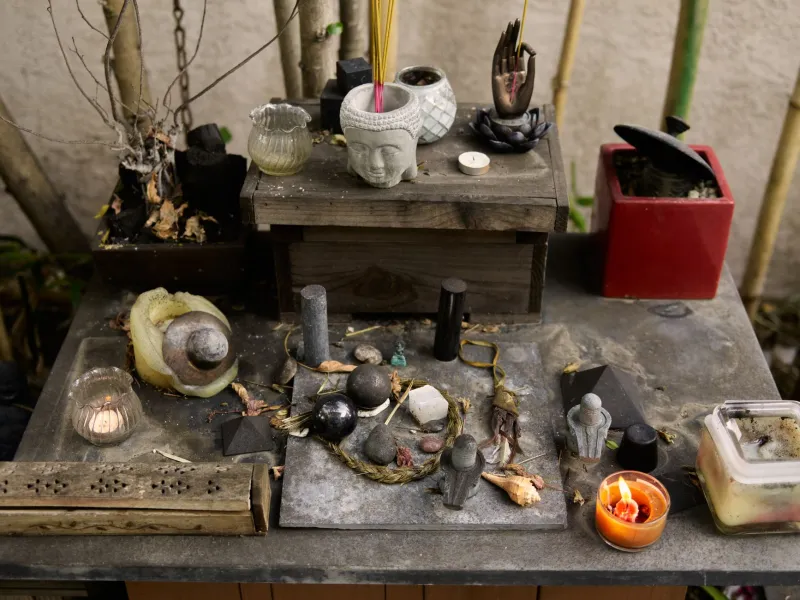
On a small table in the corner of her apartment in Minneapolis, Denise Caldwell has arranged a white cloth, a glass of cool water, a photograph of her late grandmother, a handful of cowrie shells, and a single white candle. Each morning before work, she pauses there for a few minutes. She speaks aloud—sometimes a formal prayer, sometimes simply a few words about what she is facing that day. Occasionally, she pours a small offering of water or rum onto the earth outside her window.
"People think it's strange," she says, smiling. "But I've never felt less alone."
Caldwell is one of a quietly expanding number of Americans who have incorporated African-rooted ancestral communication practices into their daily spiritual lives. What was once confined largely to practitioners of Yoruba-derived traditions such as Ifá, Candomblé, and Lucumí—or to African immigrant communities maintaining homeland customs—has broadened considerably. Today, these practices are finding resonance with African Americans reconnecting with pre-diaspora spiritual frameworks, as well as with individuals of diverse ethnic backgrounds drawn to what many describe as an irreplaceable sense of relational continuity with the dead.
The Logic of the Living Ancestor
To understand the appeal of these practices, it is necessary to first understand the cosmological framework from which they emerge. Across a vast range of African spiritual traditions—from the Akan of Ghana to the Bantu-speaking peoples of Central and Southern Africa, from the Yoruba of Nigeria to the Dagara of Burkina Faso—the boundary between the living and the dead is understood not as a wall but as a permeable membrane. The deceased do not simply cease to exist; they transition into a form of being that remains engaged with the community they have left behind.
Elders, in this understanding, do not stop being elders when they die. Grandmothers do not stop watching over grandchildren. The ancestors, properly honored and communicated with, become sources of guidance, protection, and wisdom—active spiritual presences rather than memories.
This is a profoundly different orientation toward death than the one most Americans have inherited. In a cultural context where death is frequently medicalized, institutionalized, and emotionally sequestered, the African ancestral framework offers something radically countercultural: the proposition that the dead are still here, still listening, still capable of participating in the lives of those who remember them.
Building the Altar: A Practice of Presence
The ancestral altar—known in various traditions as an egun shrine, an ancestor table, or simply a sacred space—is the physical focal point of this relational practice. Its construction is less a matter of following rigid prescription than of establishing an intentional space that communicates reverence and welcome.
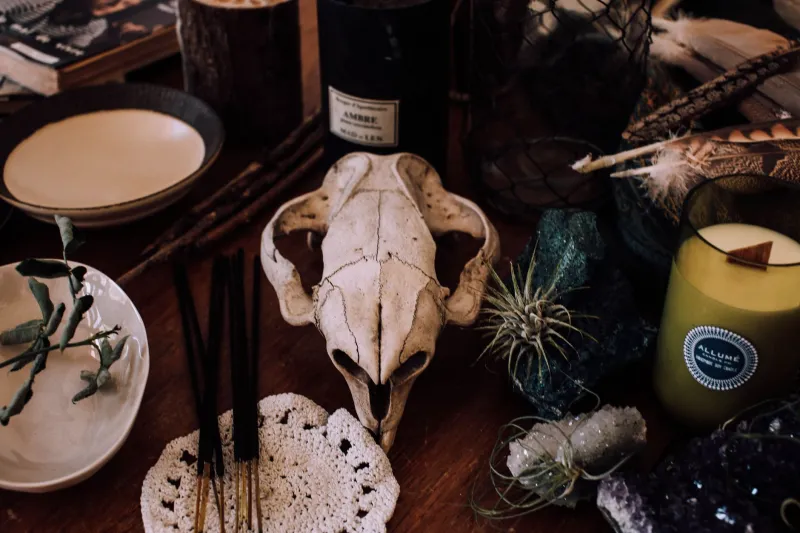
Common elements across many traditions include a white cloth, representing purity and spiritual clarity; a glass of water, which is understood in numerous African cosmologies as a medium through which spirit moves; photographs or personal objects belonging to deceased relatives; and candles or incense. Some practitioners include foods their ancestors enjoyed in life, small offerings of alcohol, flowers, or symbolic objects connected to the lineage.
Marcus Webb, a Harlem-based spiritual practitioner who has spent fifteen years studying Yoruba-derived traditions and now leads workshops on ancestral altar work, emphasizes that the altar is not a decorative object but a communication device.
"The altar says, 'I know you are here. I have not forgotten you. I am making space for you in my daily life,'" he explains. "And when you do that consistently, with sincerity, things begin to shift. You start to feel supported in ways that are difficult to explain but impossible to dismiss."
Libation: The Ancient Art of the Offering
Among the most widely practiced elements of African ancestral communication is the libation—the ritual pouring of liquid as an offering to the spirits of the deceased. In many West African traditions, no significant gathering, ceremony, or meal begins without libation. The practice is a formal acknowledgment that the ancestors are present, that they have been invited, and that their participation in the living community is honored.
In American contexts, libation has found particularly strong resonance within African American communities, where it has been reclaimed as a connection to pre-slavery spiritual identity. At family gatherings, community events, and memorial services, the act of pouring a small amount of a beverage onto the earth while calling the names of the deceased has become, for many, a profoundly moving ritual of cultural and spiritual reclamation.
Psychologists who study grief and bereavement have begun noting the emotional significance of these practices. The act of continuing to address the dead—of maintaining a relationship rather than severing it—appears to support what contemporary grief research calls continuing bonds theory: the understanding that healthy mourning does not require relinquishing connection to the deceased but rather transforming that connection into something sustainable.
Divination and Dialogue in Domestic Space
Beyond the altar and libation, some American practitioners have incorporated divination practices into their home spiritual lives as a form of ongoing dialogue with ancestral guidance. Cowrie shell readings, pendulum work rooted in African cosmological frameworks, and card systems derived from Ifá philosophy are all being adapted for personal, non-ceremonial use in domestic settings.
These practices raise important questions about transmission and integrity. Traditional African divination systems were developed within highly structured frameworks of initiation, apprenticeship, and community accountability. Their adaptation for individual, unsupervised home practice represents a significant departure from that context—one that many initiated practitioners view with concern.
"The system exists within a relationship," explains Ife Adeyemi, a Nigerian-born babalawo currently living in Atlanta who regularly addresses these questions with American students. "When you take the tool out of the relationship, you may still receive something. But you are working with only part of what is available."
His perspective reflects a broader conversation within the community of African spiritual practitioners about how to share these traditions with a genuinely hungry American audience while preserving their depth and integrity.
An Intimacy the Modern World Forgot
What unites all of these practices—the altar, the libation, the ongoing conversation with those who have passed—is a quality of intimacy that many Americans describe as having been missing from their spiritual lives. The ancestors are not distant theological abstractions. They are grandmother, grandfather, great-uncle, the lineage that runs through the body and the blood.
For Denise Caldwell, standing at her altar each morning in Minneapolis, the practice has become less about belief in any particular doctrine and more about a felt relationship that orients her days.
"I don't need to have all the answers about what happens after death," she says. "I just know that when I stand there and speak to her, something listens. And that changes everything."
In a culture that has grown increasingly isolated, increasingly uncertain, and increasingly hungry for forms of connection that transcend the digital and the transactional, the ancient African understanding that the dead remain among us may be offering something the modern world has been quietly desperate to remember.