When the Ancestors Speak in Sleep: African Dream Traditions and the American Search for Nighttime Healing
The Crisis That Opened a Door
The United States is, by nearly every clinical measure, a sleep-deprived nation. The Centers for Disease Control and Prevention estimates that roughly one in three American adults does not get sufficient sleep on a regular basis. Prescription sedatives have become one of the most commonly dispensed categories of medication in the country, and yet the hunger for genuine, restorative rest remains largely unsatisfied. For a growing community of wellness seekers, spiritual practitioners, and individuals of African descent reclaiming their heritage, the answer may not lie in a pharmacy — it may lie in traditions that predate written medicine by thousands of years.
Across the African continent, sleep has never been treated as a mere biological function. It is, in many traditions, a threshold — a liminal passage through which the living may communicate with ancestors, receive prophetic instruction, and restore not only the body but the spirit. As these traditions find new expression in American homes, they are challenging the dominant cultural assumption that rest is simply the absence of wakefulness.
Dreaming as a Spiritual Discipline
In numerous West and Central African cosmologies, the dream state is understood as a realm where the soul temporarily separates from the physical body and enters a dimension accessible to ancestral spirits and divine messengers. Among the Dagara people of Burkina Faso, for example, dreams are not considered private psychological events but communal spiritual communications that may carry guidance for entire families or communities. A dream is something to be shared, interpreted, and honored — not dismissed upon waking.
This framework stands in striking contrast to the Western clinical model, which largely treats dreams as the byproduct of memory consolidation or emotional processing. African spiritual traditions insist that the dream world is inhabited, purposeful, and deeply responsive to intention.
For practitioners in the United States who have studied these traditions — whether through lineage, apprenticeship, or dedicated scholarship — the distinction is not merely philosophical. It is practical. Teaching dream work through an African spiritual lens means instructing students to prepare for sleep as they would prepare for a sacred ceremony.
The Ritual Architecture of Rest
What does African-rooted sleep preparation actually look like in a contemporary American context? Practitioners describe a layered process that begins long before the head meets the pillow.
Verbal invocation is among the most foundational elements. In many traditions across the continent, speaking aloud to one's ancestors before sleep is understood as an act of spiritual alignment — an opening of the channel through which guidance may flow. This practice, adapted by African American spiritual communities and diasporic practitioners alike, often involves calling the names of known ancestors, stating one's intentions for the night, and requesting protection during the hours of vulnerability that sleep represents.
Herbal preparation occupies another significant layer of this tradition. Plants such as African dream root (Silene capensis), used ceremonially by the Xhosa people of South Africa, have attracted considerable attention from American wellness communities for their reported ability to enhance dream vividness and recall. Mugwort, though more commonly associated with European herbalism, appears in overlapping traditions across the African diaspora as a dream-amplifying herb. Practitioners emphasize, however, that these plants are not supplements to be taken casually — they are sacred tools that carry their own spiritual protocols.
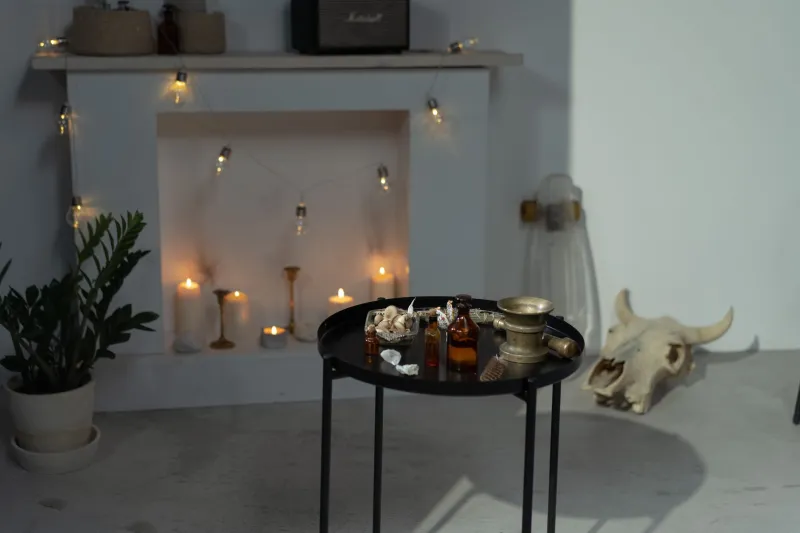
Physical space preparation also features prominently. The arrangement of sleeping quarters according to spiritual principles — the placement of ancestral objects, the use of specific colors, the burning of particular resins or woods — reflects an understanding that the environment in which one sleeps is not spiritually neutral. It either supports or impedes the soul's nocturnal work.
Dream Interpretation as Community Practice
Perhaps the most culturally distinctive aspect of African dream traditions, from an American perspective, is the communal dimension of interpretation. In a society that prizes individual privacy and psychological self-sufficiency, the idea that a dream might be brought before a trusted elder, a diviner, or a spiritual community for collective discernment can feel unfamiliar — even vulnerable.
Yet this is precisely what many practitioners and knowledge keepers are reintroducing. Dream circles, modeled on traditional communal practices and adapted for contemporary urban life, are emerging in cities including Atlanta, Chicago, Detroit, and Washington, D.C. Participants gather — sometimes in person, sometimes virtually — to share their nocturnal visions and receive interpretation rooted in African symbolic frameworks rather than Western psychological theory.
The symbols that carry meaning in these traditions are often distinct from those catalogued in popular Western dream dictionaries. Water, for instance, may signal ancestral presence rather than emotional depth. Specific animals carry cosmological significance that varies by cultural tradition. Numbers, colors, and directions all speak within their own spiritual grammar.
A Wellness Industry Takes Notice
The broader American wellness industry, always alert to emerging consumer interest, has begun to register the cultural shift. Independent apothecaries specializing in African and diasporic herbal traditions have reported increased demand for dream-related botanical preparations. Retreat centers offering immersive programs in African spiritual practices now frequently include dedicated modules on dream work. And a new generation of authors, podcasters, and educators — many of them African American women — are publishing accessible introductions to these traditions for mainstream audiences.
Critical voices within African spiritual communities caution against the commodification of sacred knowledge. The concern is not unfounded: the wellness industry has a well-documented history of extracting indigenous practices from their cultural and spiritual contexts and repackaging them as lifestyle products. Responsible engagement with African dream traditions, practitioners emphasize, requires acknowledgment of origin, respect for protocol, and ideally, relationship with a living lineage or knowledge keeper.
Reclaiming the Night
For many African Americans in particular, the turn toward ancestral dream practices carries dimensions that extend beyond personal wellness. It is, for some, an act of cultural recovery — a reclamation of spiritual inheritance that was systematically suppressed during centuries of enslavement and its aftermath. To sleep with intention, to dream with purpose, and to wake with the guidance of one's ancestors is, in this light, a quietly radical act.
The ancient wisdom held within African sleep and dream traditions does not promise a quick cure for insomnia. What it offers instead is something more enduring: a reimagining of the night as sacred time, and of the dreaming self as a being worthy of spiritual attention. In a culture that has long treated rest as mere productivity recovery, that reframing may be among the most subversive — and most healing — gifts these traditions have to offer.